The Kaliphate
A speculative fiction. The Roman-Persian map, drawn again, with Jerusalem standing in for Paektu. The K is the joke.
 · AI Assisted
This is fiction. Not a prediction, not a hope, not a plan. It replays an old story with today’s countries in the costumes. The real history is in the Roman-Persian essay.
The story goes like this. Around 600 AD, Rome and Persia were the world’s two superpowers. They wore each other out in a long war. Then a third power nobody expected came out of Arabia and took half of both. That was the Caliphate.
Swap in today’s cast. America is Rome. China is Persia. Japan is Greece. Korea is Arabia. The third power in this story is the Kaliphate. The K is for Korean, and it’s a joke.
Same color, same role. Persia and China share gold. Rome and America share red. Greece and Japan share blue. The Caliphate and the Kaliphate share green. Jerusalem and Mount Paektu share the star.
Alexander takes Persia in ten years. Imperial Japan takes the China coast, and does not keep it.
- Eastern Rome / America
- Western Rome / the Atlantic
- Persia / China
- Greece / Japan
- Caliphate / Kaliphate
- The steppe / Russia
- Jerusalem / Paektu
Press play, or pick a moment. The right-hand map squeezes the Pacific so China and America fit in one picture. The coasts are real. The ocean is the cheat. Click any map to enlarge it, and use the arrow button to replay it.
The cast
Persia → China. The Persian Empire of Cyrus and Darius was the first giant. It fell to Alexander. Five centuries later the Sasanians rebuilt it. China’s Qing dynasty was the giant. It broke apart, Japan invaded, and the People’s Republic rebuilt it. So the Achaemenids are the Qing, and the Sasanians are the People’s Republic.
Greece → Japan. Macedon was a small, tough neighbor on Greece’s edge. Alexander took all of Persia in ten years, and the empire fell apart when he died. Imperial Japan did the same thing to China and Southeast Asia, and collapsed in 1945. Afterward Greek art conquered Rome, and anime conquered America.
Arabia → Korea. Before the Caliphate, the Arabs were split. Rome paid one Arab kingdom and Persia paid another to guard the desert. Korea today is the same: one people, two client states, two patrons.
The star
Mecca was always Arabia’s. Jerusalem was not. It belonged to Rome, then Persia, then Rome again, and then the third power took it from both.
Paektu fits that role. It is the sacred mountain of the Koreans and of the Manchus, who ruled China as the Qing. The border between China and North Korea still runs through its crater lake. In the story, Seoul and Pyongyang become shrines, the way Mecca and Medina did. Real power moves north, the way the Caliphate’s capital moved to Damascus and then Baghdad.
Siberia is the Maghreb
The Caliphate conquered Persia, but Persia stayed Persian. Iranians took up Islam and kept their own language. Arabic spread where local identity was thinner: Iraq, Syria, Egypt, and North Africa, which Arabs call the Maghreb, “the west.” That is why the Arab world today is Arabia and North Africa, not Iran.
The fiction follows the same rule. China would stay Chinese, as Iran stayed Iranian. Siberia would be the Maghreb: vast, thinly settled, and loosely held, so it would take the new language. The “Koreanic world” would be the peninsula and most of Siberia.
Side by side
The left column is what happened. The right is the costume. Every map has a partner on the other side.
The Western Empire
Rome and America.
The source
Egypt is the old country Greece and Rome learned from. Europe is that country for America.
An old river civilization, already ancient when Greece and Rome were learning their gods, their measures, and their stone.
“The names of nearly all the gods came to Greece from Egypt.”
Herodotus 2.50
Older, split into rival states, and the source of America’s language, law, and faith.
“What then is the American, this new man? He is either an European, or the descendant of an European.”
J. Hector St. John de Crèvecœur, 1782
Seven hills
A village on seven hills, and thirteen colonies on one coast.
A few hills by the Tiber, one Latin town among many. Not yet an empire.
“From slender beginnings it has so grown that it is now overburdened by its own greatness.”
Livy, preface
A string of colonies on the Atlantic, squabbling with each other and with London.
“Thirteen clocks were made to strike together.”
John Adams, 1818
The republic
Then the republics grew. Rome by sea, America by land.
Sicily, Africa, Greece, then Egypt. The Mediterranean becomes a Roman lake.
“They took in hand for the first time to build ships.”
Polybius 1.20
America walks west until it hits the Pacific. Only then does it turn to the sea.
“Our manifest destiny to overspread the continent allotted by Providence.”
John L. O’Sullivan, 1845
The peace
A settled order, with one people running it.
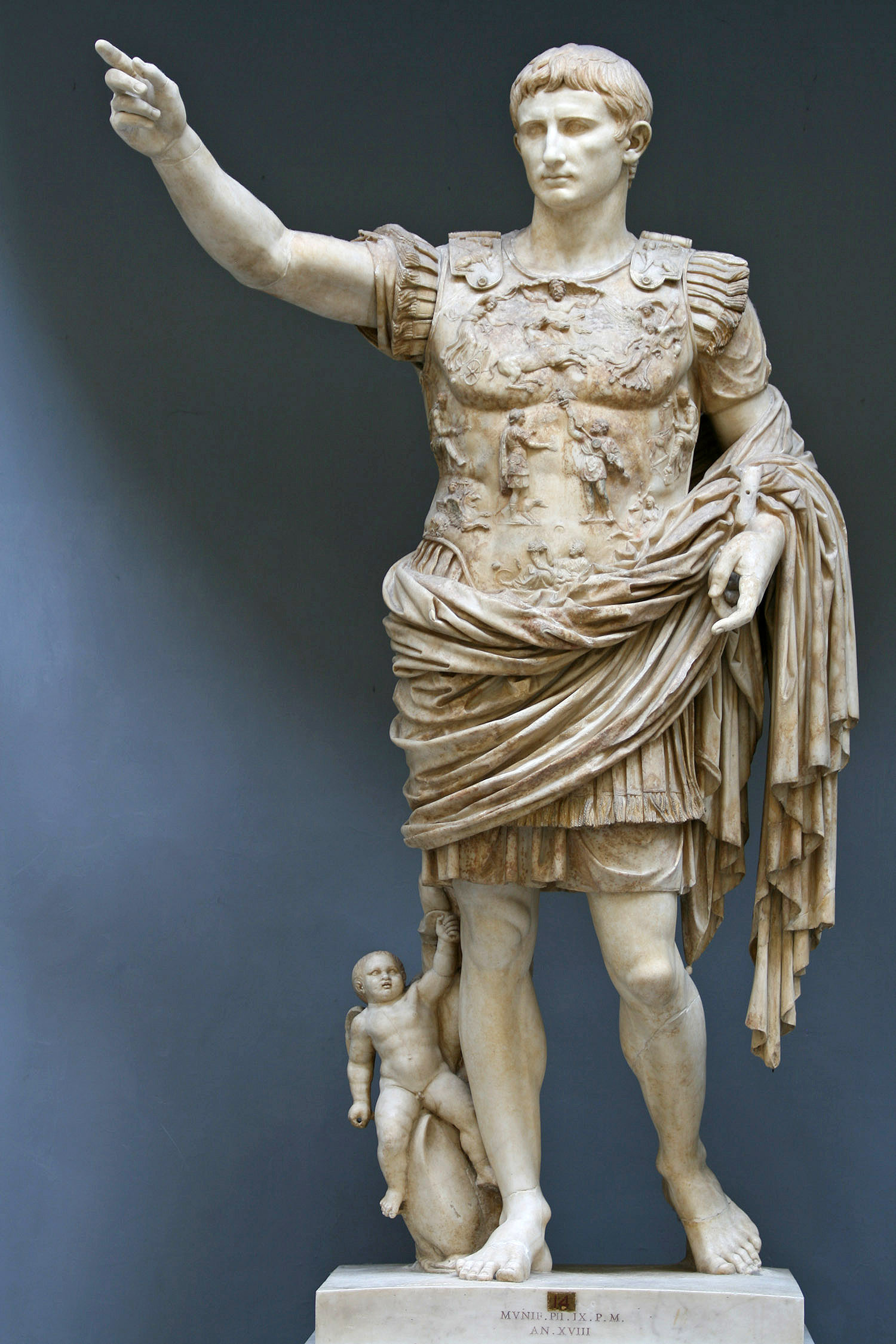
Augustus said he restored the republic while ruling it alone. In 212, every free man in the empire became a citizen.
“I transferred the republic from my power to the dominion of the senate and people of Rome.”
Augustus, Res Gestae 34
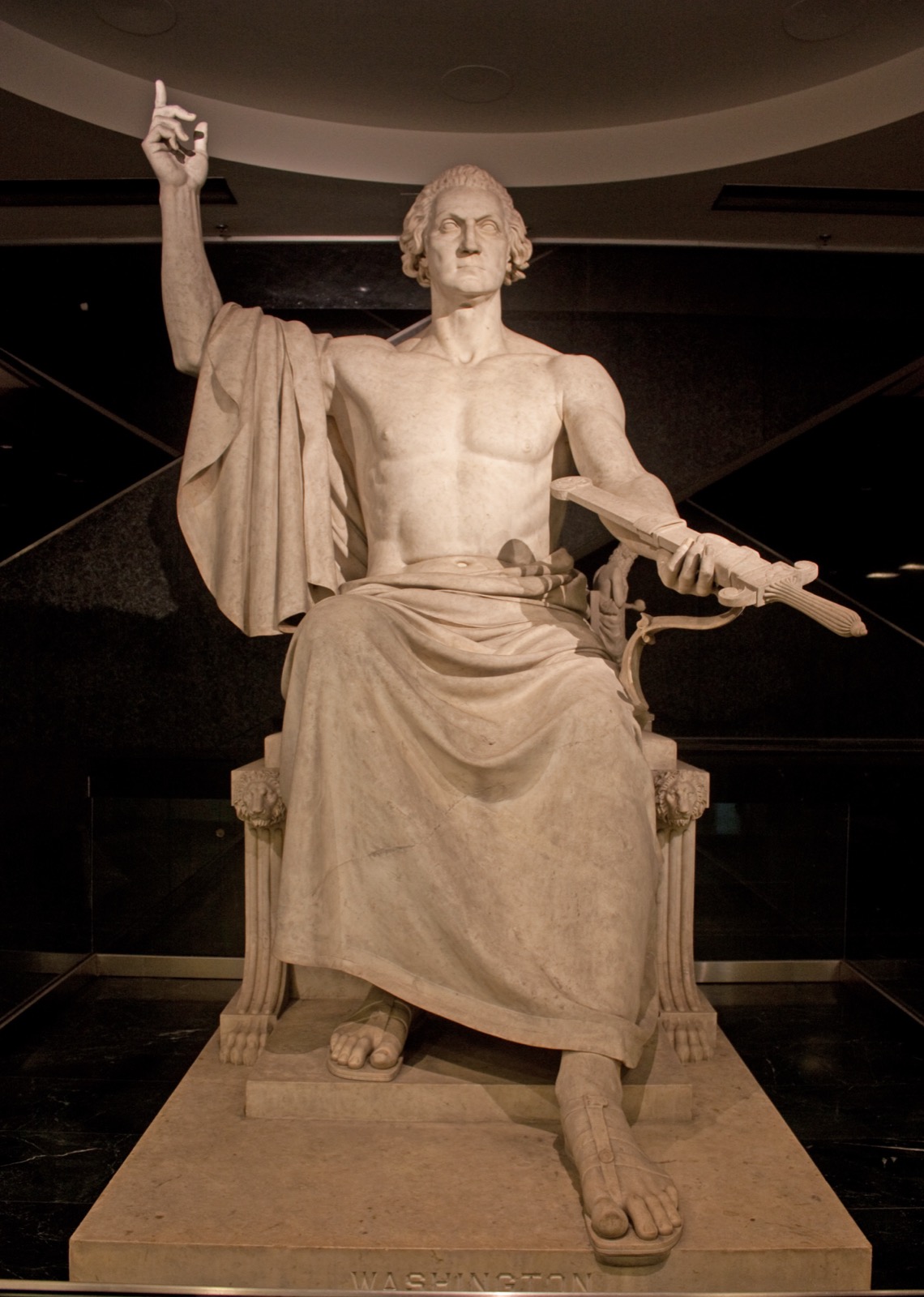
Citizenship by oath, not by blood, as in Rome. Washington is painted rising into the sky like an emperor.
“Government of the people, by the people, for the people.”
Abraham Lincoln, 1863
The house
A dome over a civic religion.
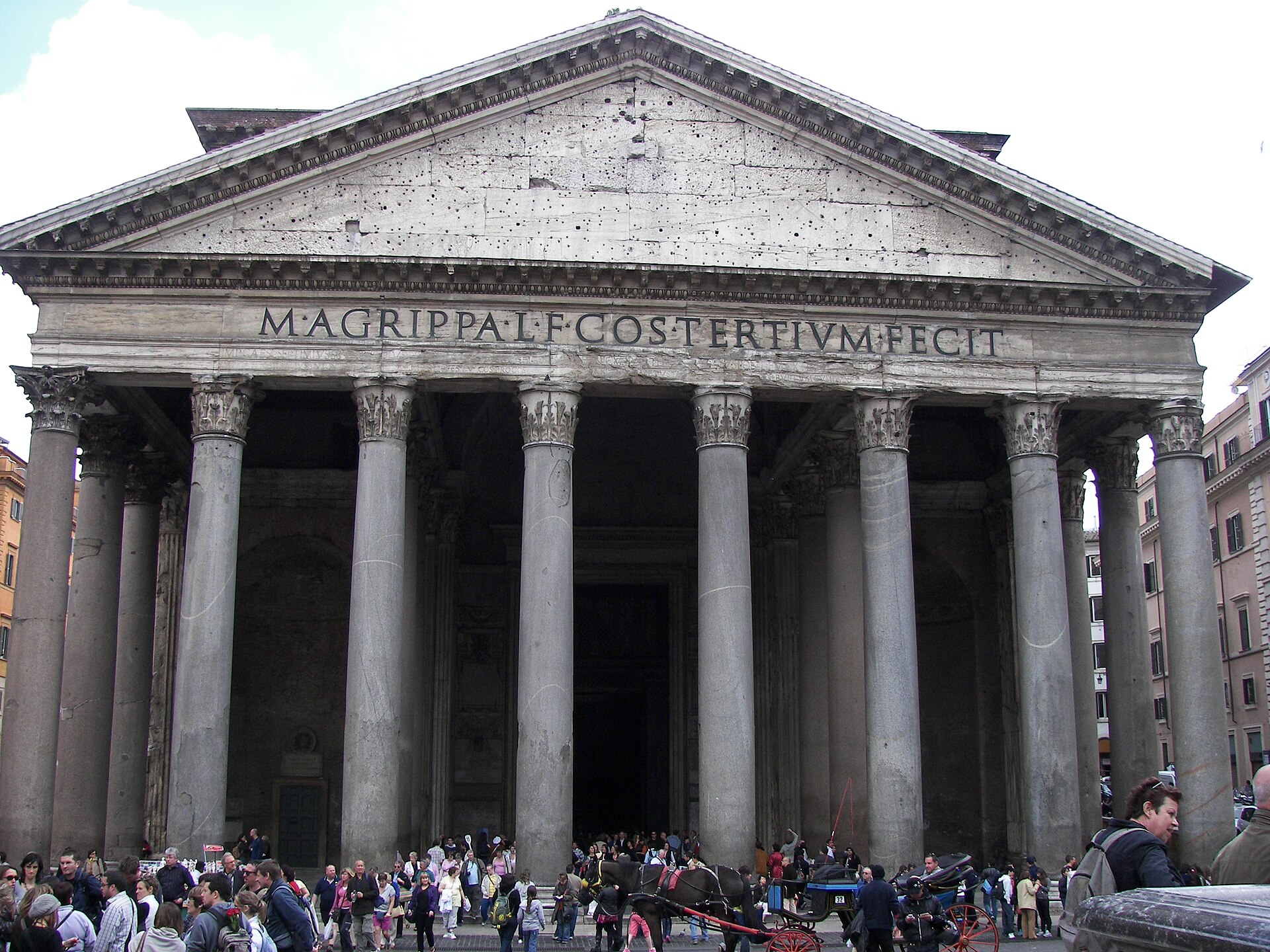
A temple front and a dome. The Roman state, in stone.
“Because of its vaulted roof, it resembles the heavens.”
Cassius Dio 53.27
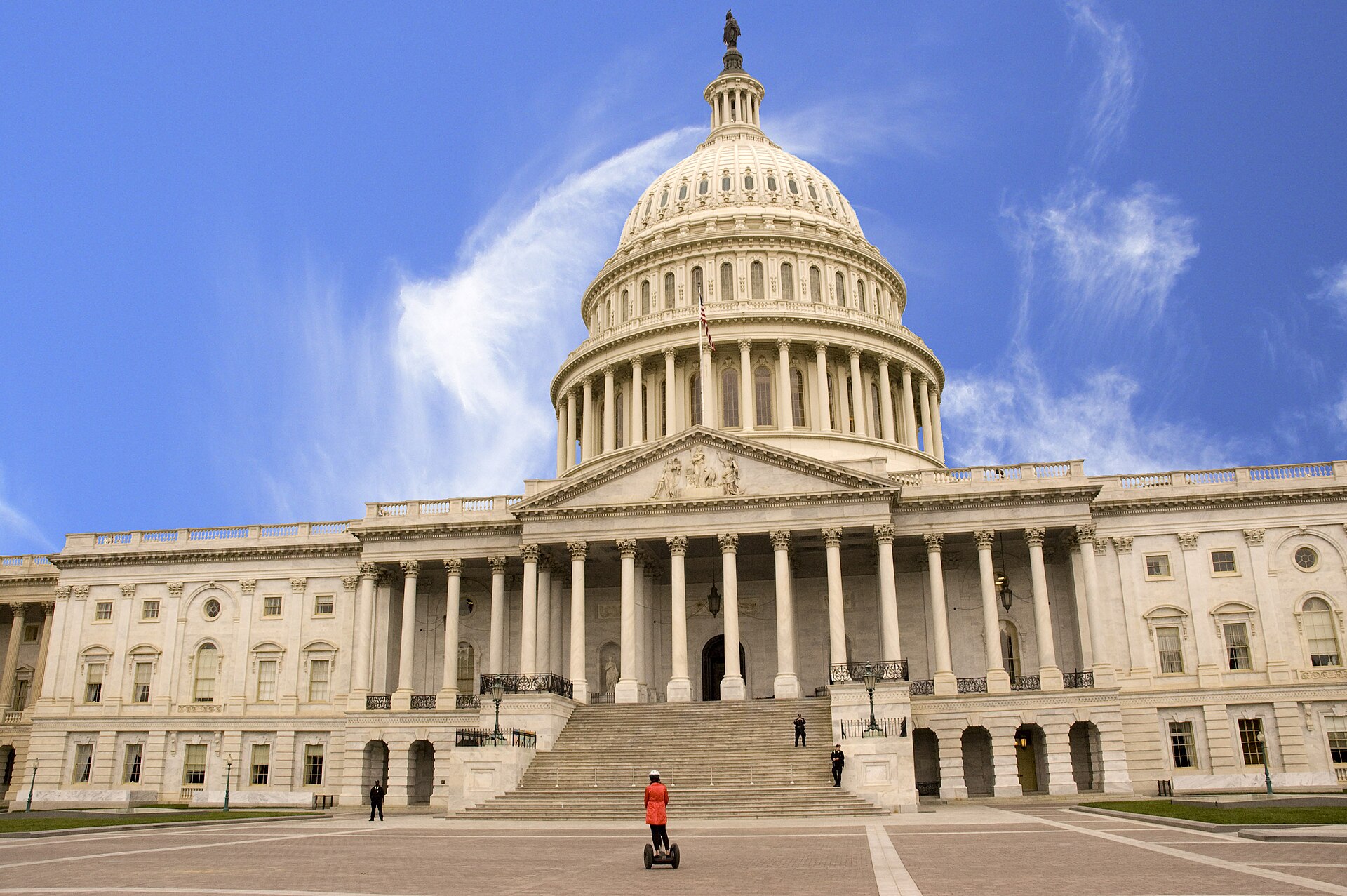
Columns, a pediment, a dome. A Roman temple for a new senate.
“…presenting to them models for their study and imitation.”
Thomas Jefferson, 1785
The man
A republic, and the man who steps over its line.
A general brings his army across the Rubicon, which the law forbids, and a large part of the republic goes with him.
“The die is cast.”
Caesar, in Suetonius, Divus Julius 32
The claim that the office and the man are the same thing, and that the republic’s limit does not bind him.
“I alone can fix it.”
Donald Trump, Republican National Convention, 2016
The Eastern Realm
Persia and China.
The country
Strip the empire away and the country is still there.
The plateau. Every Persian empire grew out of it and shrank back to it.
“I am a Persian, son of a Persian, an Aryan of Aryan stock.”
Darius I, Naqsh-e Rostam
The old provinces inside the Great Wall. Manchuria, Mongolia, and Tibet are the rim.
“He built the Long Wall… from Lintao to Liaodong, more than ten thousand li.”
Sima Qian, Records of the Grand Historian
The widest empire
First a giant empire. Then it broke.
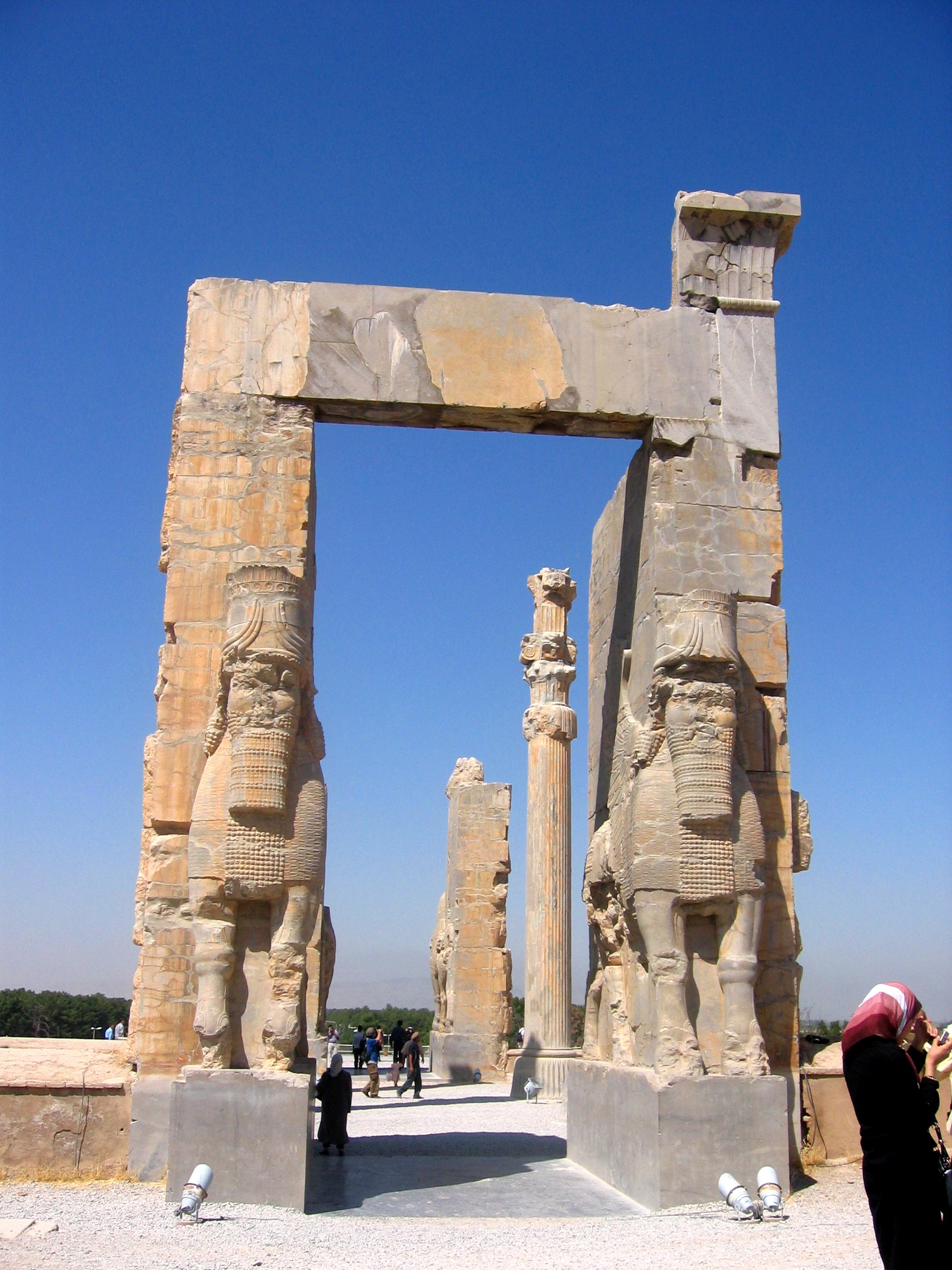
Persia’s first empire, from Egypt to India. Alexander ends it.
“This is the kingdom which I hold, from the Sacae who are beyond Sogdiana, thence unto Ethiopia; from Sind, thence unto Sardis.”
Darius I, Persepolis
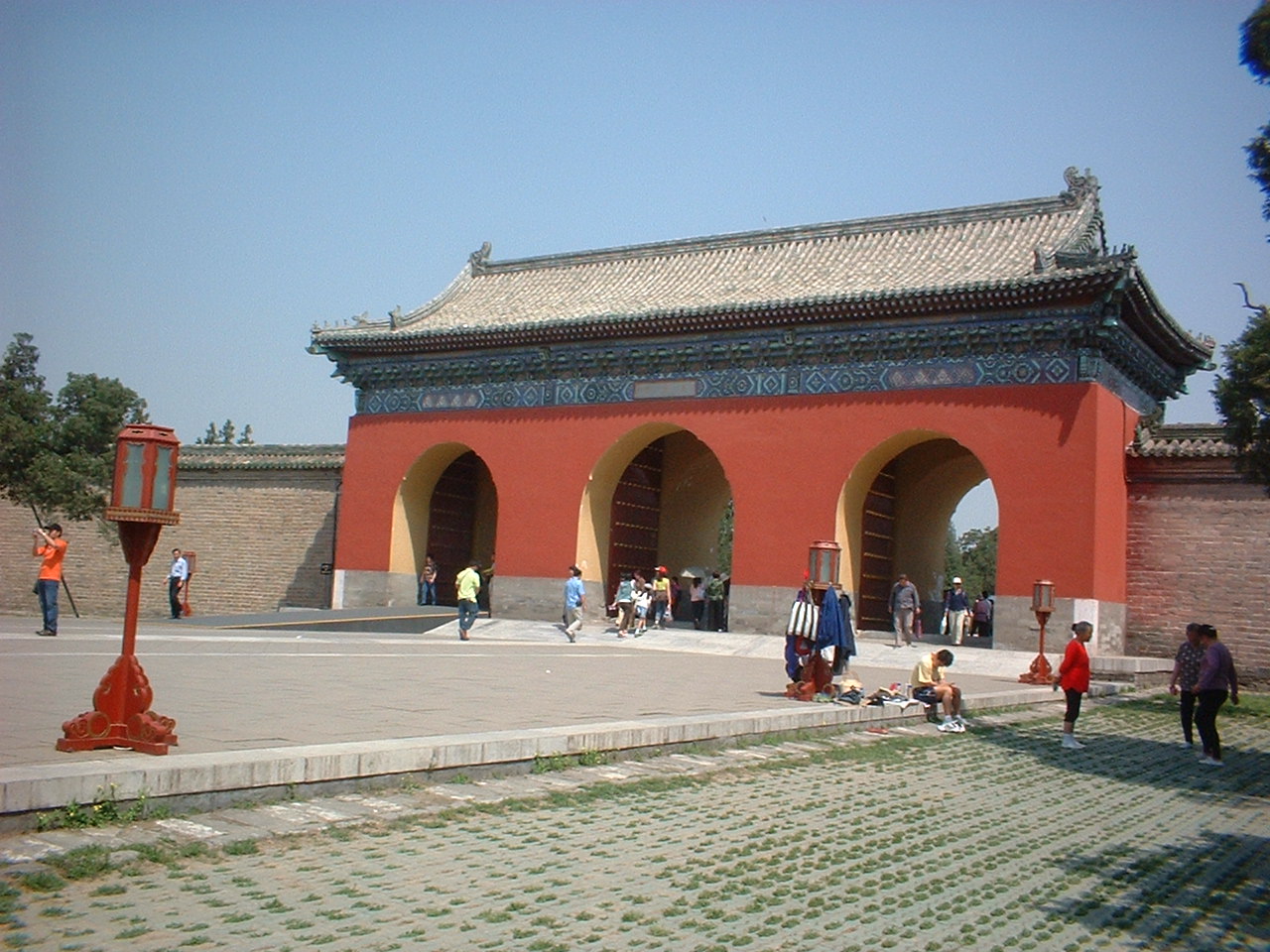
China’s last dynasty, at its widest: Tibet, Mongolia, Xinjiang, Taiwan. It breaks under foreign pressure.
“Our Celestial Empire possesses all things in prolific abundance.”
The Qianlong Emperor to George III, 1793
The neighbor
A smaller people breaks the giant, once.
Macedon ends the Achaemenid empire in ten years. The empire splits when Alexander dies.
“Is it not worthy of tears that, when the number of worlds is infinite, I have not yet become lord of one?”
Alexander, in Plutarch
Japan breaks the Qing’s succession and takes the coast. It does not keep China.
“The eight corners of the world under one roof.”
Hakkō ichiu, the empire’s slogan
The successor
After the giant breaks, a smaller dynasty holds the country.
The Arsacids take Iran and Mesopotamia back from Alexander’s successors. They stop at the Euphrates. Egypt is not theirs.
“Having divided the world with the Romans, they held the empire of the east.”
Justin, Epitome 41.1
After the Qing, the republic holds the country the People’s Republic holds, except Tibet. It spends itself in warlords, invasion, and civil war. The comeback dynasty is still ahead of it.
“The revolution is not yet complete. Let all our comrades strive on.”
Sun Yat-sen, political testament, 1925
The comeback
Beaten by a smaller neighbor, the old country rises again.
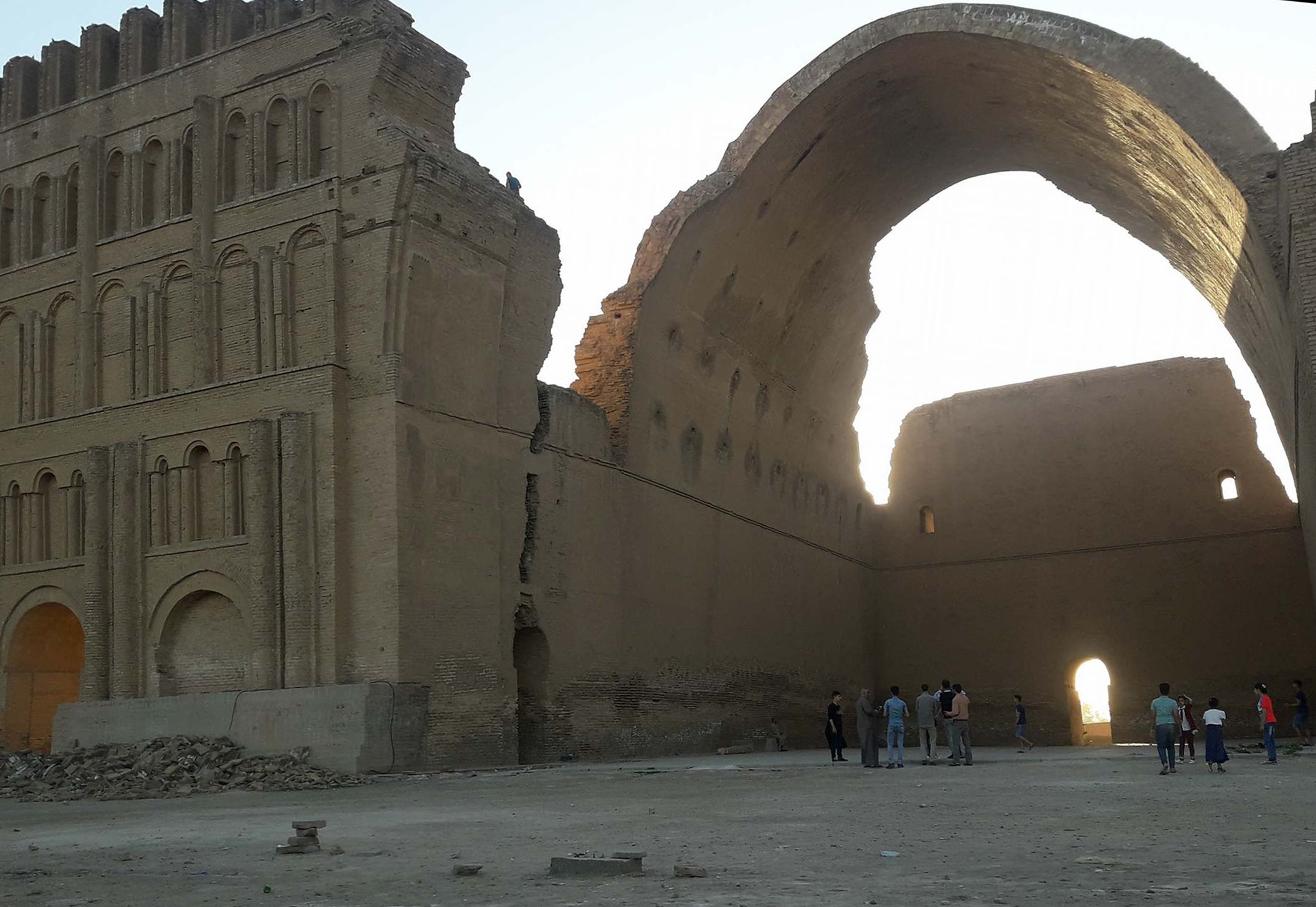
Five centuries after Alexander, a Persian dynasty takes Iran and Mesopotamia back. This is that realm, not the Egyptian occupation of 620.
“I, the Mazda-worshipping lord Shapur, king of kings of Iran and non-Iran.”
Shapur I, Naqsh-e Rostam
“He declared that he would recover for the Persians the kingdom which they had formerly possessed as far as the Grecian Sea, claiming that all this was his rightful inheritance from his forefathers.”
Herodian 6.2.2, on Ardashir I
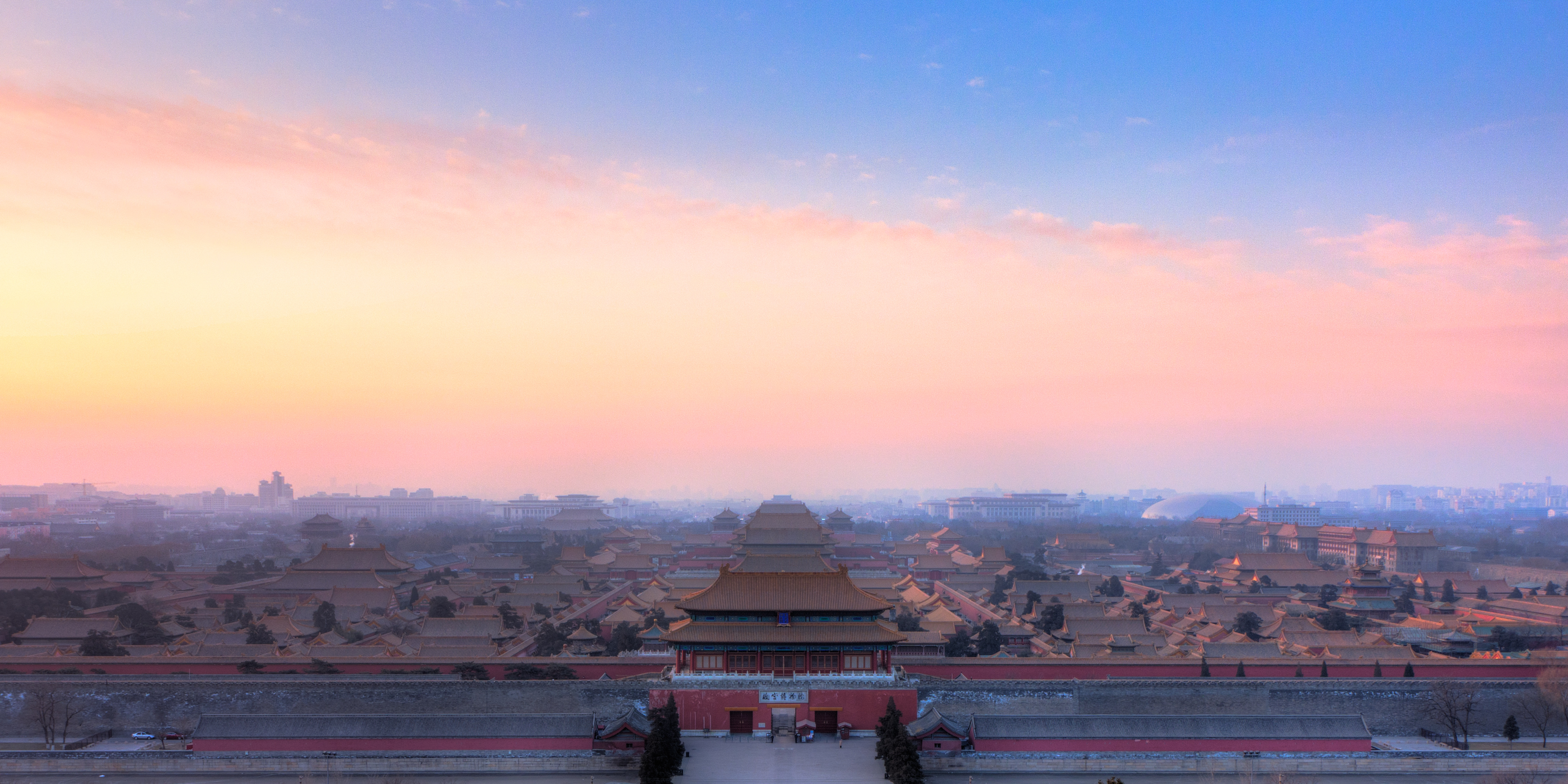
After a century of loss, China puts the country back together and calls the old lands its own again.
“Ours will no longer be a nation subject to insult and humiliation. We have stood up.”
Mao Zedong, 1949
“Realizing the great rejuvenation of the Chinese nation is the greatest dream of the Chinese nation since modern times.”
Xi Jinping, 2012
“We will never allow anyone, any organization, or any political party, at any time or in any form, to separate any part of Chinese territory from China.”
Xi Jinping, 19th Party Congress, 2017
The Archipelago
Greece and Japan.
The captive culture
The loser’s art conquers the winner.
The original
The look itself, before the empires that carried it.
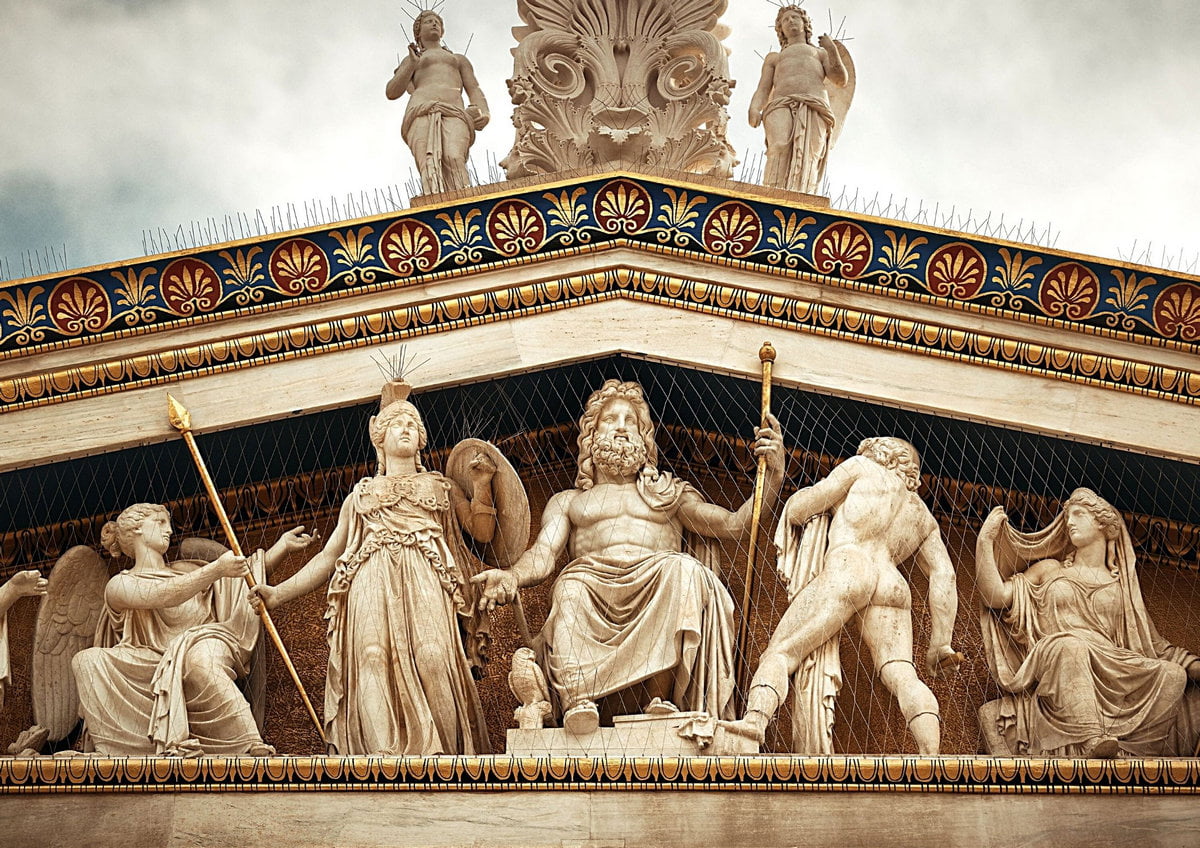
This is the Greek look: Zeus, Athena, Apollo, the gods in a row. Rome copied it for centuries.
“Captive Greece took her savage conqueror captive.”
Horace, Epistles 2.1
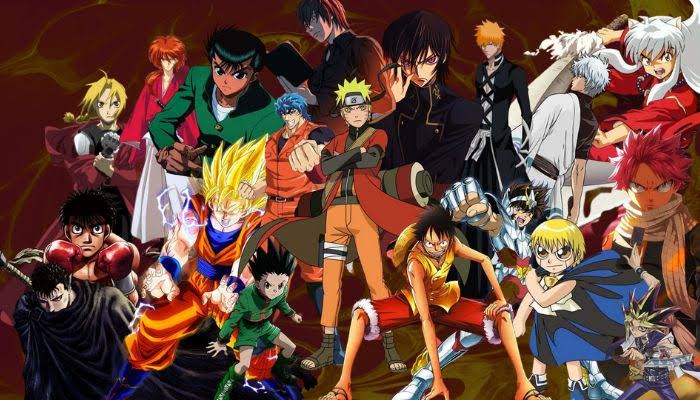
Japan lost the war, and this is the look that won: the heroes it sent out afterward.
“Japan has been reinventing its influence as a cultural power.”
Douglas McGray, 2002
The early form
Before the classic style: gold masks, and borrowed oil paint.
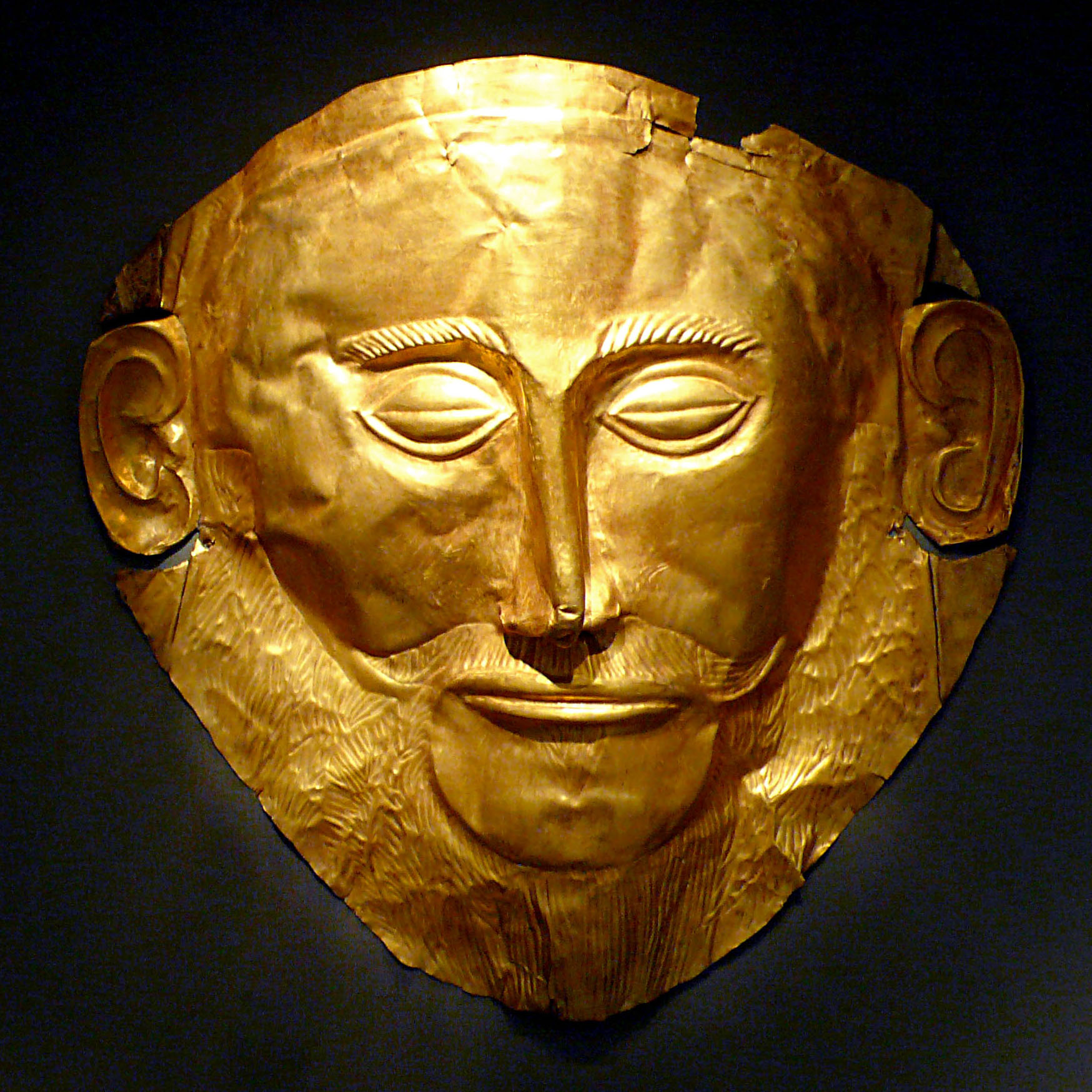
The Greek look had a childhood. This gold mask is it.
“I have found the tombs which the tradition of the whole civilized world has attributed to Agamemnon, Cassandra, and their companions.”
Heinrich Schliemann, 1876
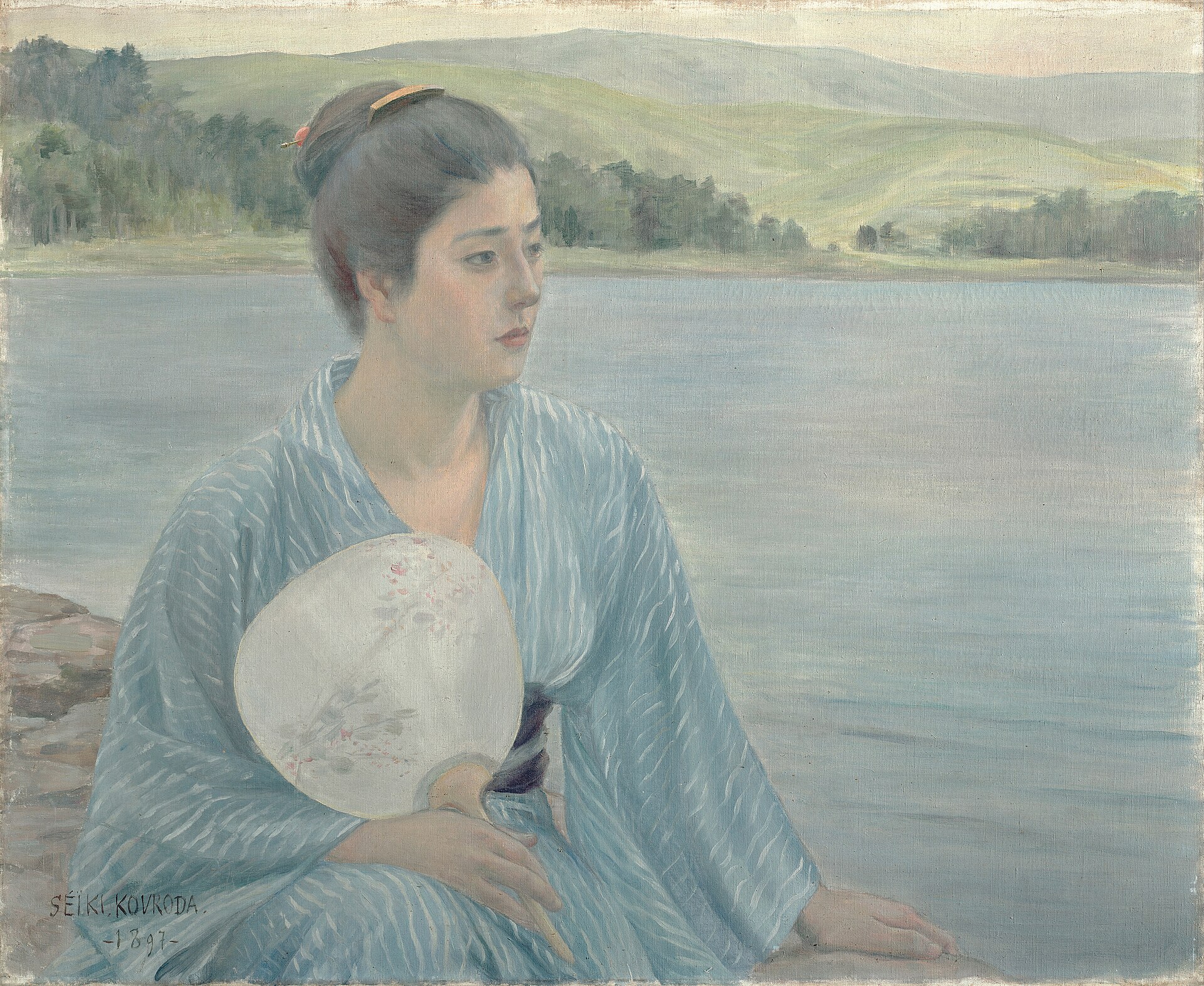
Japanese painters learned Western oil paint, then made it their own. The training before anime.
“We should leave the ranks of Asian nations and cast our lot with the civilized nations of the West.”
Fukuzawa Yukichi, 1885
The conqueror next door
A small, warlike neighbor beats the old giant, once.
Macedon, on Greece’s northern edge, conquers all of Persia in ten years. The empire splits when Alexander dies.
“Is it not worthy of tears that, when the number of worlds is infinite, I have not yet become lord of one?”
Alexander, in Plutarch
Japan, off China’s coast, takes Manchuria, the coast, and Southeast Asia. It collapses in 1945.
“The eight corners of the world under one roof.”
Hakkō ichiu, the empire’s slogan
The conquest
Rome takes Greece. The United States takes Japan.
Rome breaks the Achaean League and burns Corinth. Macedonia already has a Roman governor. Greece, which had taught Rome, is now ruled from Rome.
“I saw pictures thrown upon the ground, and soldiers playing at dice on them.”
Polybius, on the sack of Corinth, in Strabo 8.6.23
The United States fights Japan across the ocean and, in 1945, occupies the home islands. Korea and Taiwan leave the empire. Japan stays under American arms.
“Today the guns are silent. A great tragedy has ended. A great victory has been won.”
Douglas MacArthur, Tokyo Bay, 2 September 1945
The admirers
Philhellene, and Japanophile.
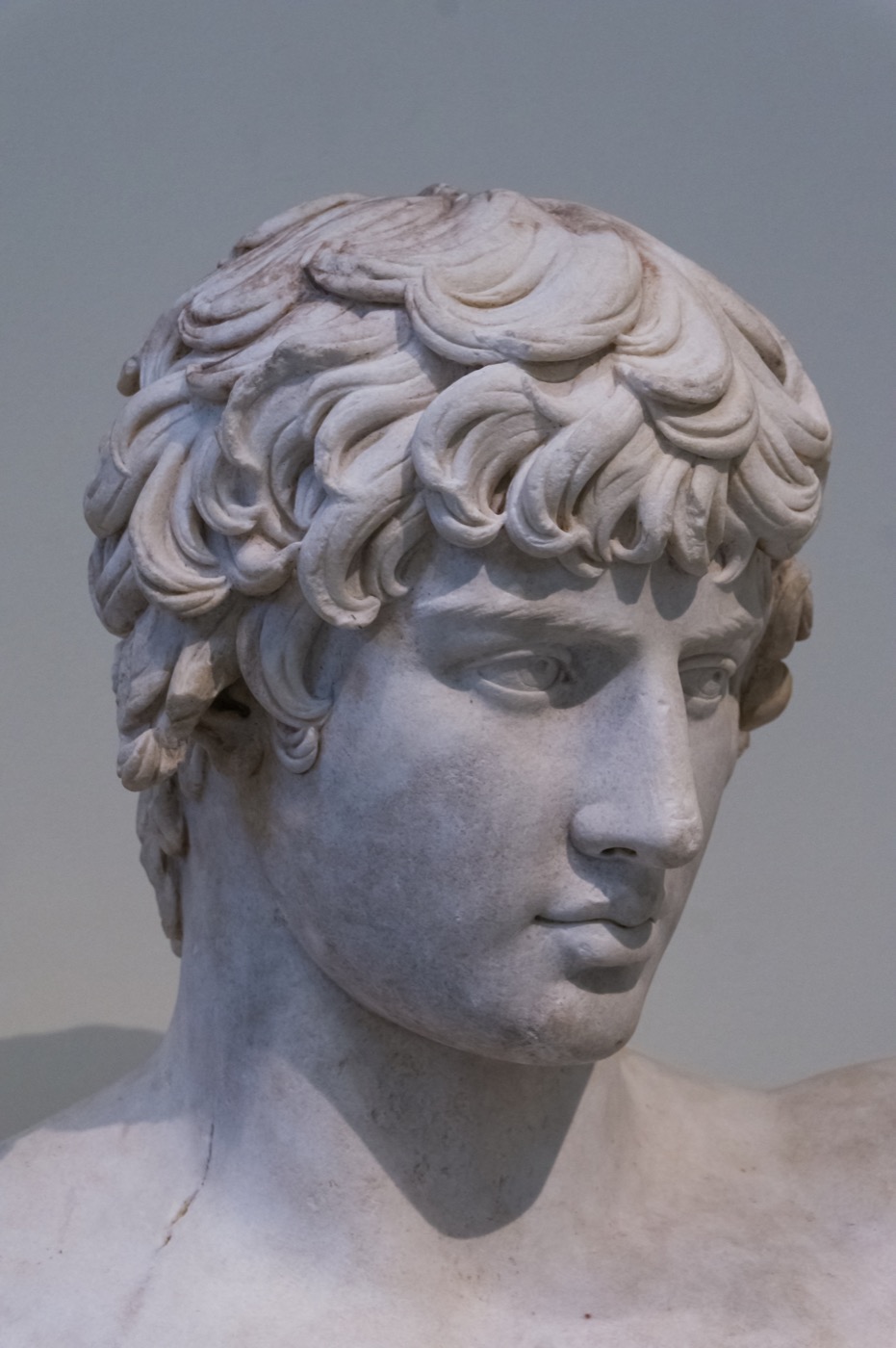
Rome conquered Greece and then could not stop collecting it. Hadrian’s Greece had a face: Antinous, mourned across the empire.
“Captive Greece took her savage conqueror captive.”
Horace, Epistles 2.1
Japan lost the war, and the look traveled anyway. The weeaboo is the philhellene of this story: devoted to a culture his own country once beat.
“Japan has been reinventing its influence as a cultural power.”
Douglas McGray, 2002
The Peninsula
Arabia and Korea.
The hired cousins
One people, split between two patrons.
Arab kingdoms paid by Rome and by Persia to guard the desert. Both patrons later scrapped them.
“…and bestowed upon him the dignity of king, a thing which among the Romans had never before been done.”
Procopius 1.17
One people, two client states. The patrons resent them and cannot drop them.
“When whales fight, the shrimp’s back is broken.”
Korean proverb
The holy place
A sacred site both empires already fought over.
Roman, then Persian, then Roman again. The new power took it from both.
“They captured Jerusalem and carried off the Lord’s Cross.”
Sebeos, on 614
Sacred to Koreans and to the Manchus. The border still splits its crater lake.
“Hwanung descended to the summit of Taebaek, and under a sandalwood tree he established a sacred city.”
Iryeon, Samguk Yusa
The prophet
One person, before the armies.
One man, from the Hejaz, makes a new community. The armies come after he is gone.
“O people, lend me an attentive ear, for I do not know whether, after this year, I shall ever be amongst you again.”
The Farewell Sermon, as transmitted by Ibn Ishaq
The story’s guess of the same kind of person, out of Korea: one voice, then a people, then the march. This essay calls that person The Prophet, and names no one living.
The union
Before the spread, one country.
For the first time the whole peninsula answers to one city, Medina. Rome and Persia are exhausted from war.
“The Arabs will recognize authority only in this clan of Quraysh.”
Abu Bakr, in al-Tabari
In the story, North and South become one state while China and America wear each other out.
“I want our nation to be the most beautiful nation in the world.”
Kim Gu, 1947
The peoples there
Siberia is the Maghreb. The people were already on the ground.
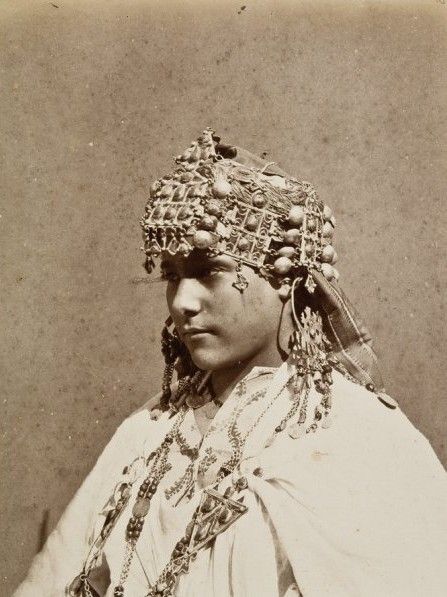
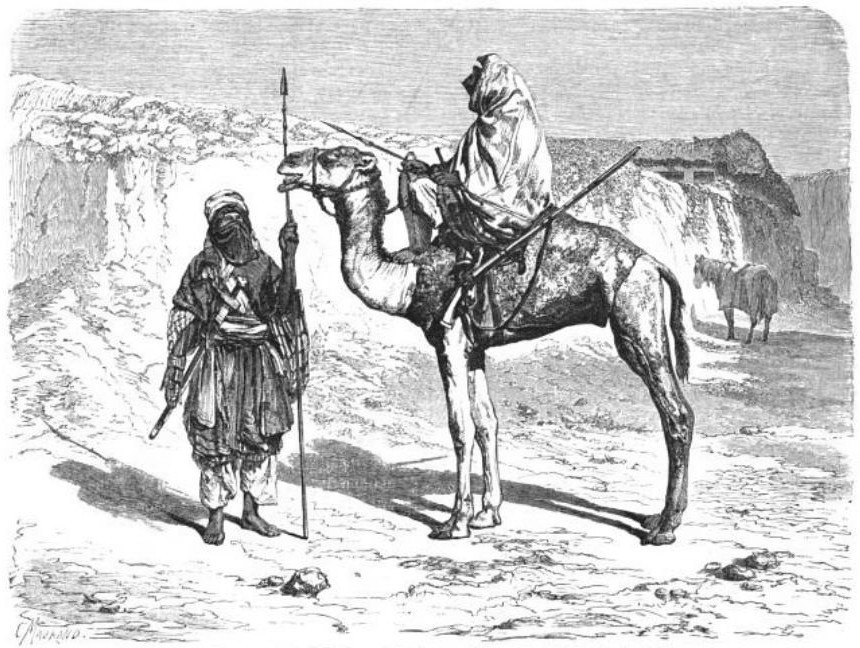
Before Arabic, North Africa was Berber. On the Atlantic, the Mauri. Inland, Numidia, Massaesyli to the west and Massylii toward Carthage. South of the Atlas, the Gaetuli. In the Fezzan, the Garamantes. By the Gulf of Sidra, the Nasamones. The shapes are homelands, not surveyed borders.
“They are the most numerous of peoples, and their tribes and subtribes are beyond counting.”
Ibn Khaldun, on the Berbers
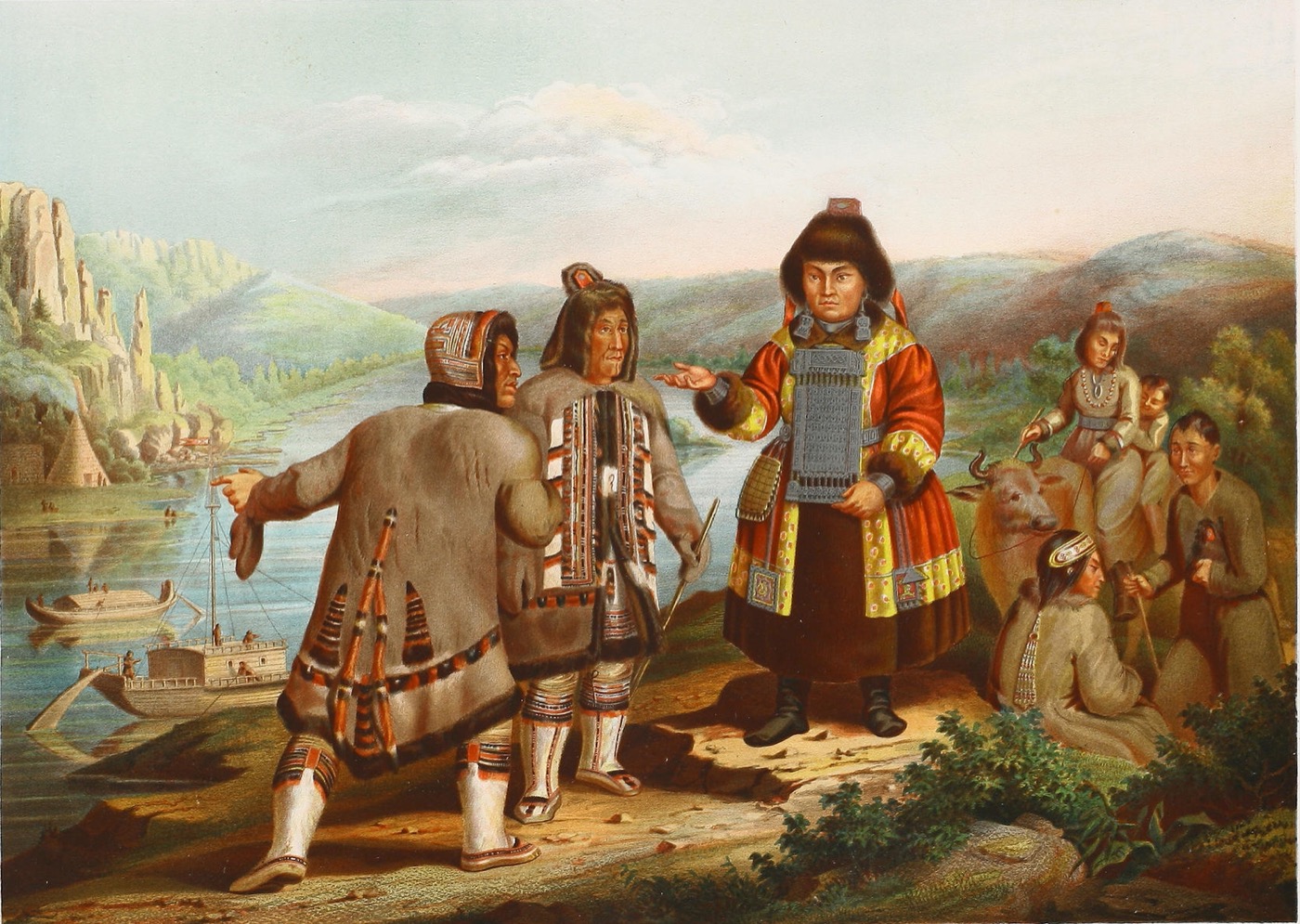
The minority peoples still there: Nenets and Khanty-Mansi on the Ob, Evenks across the taiga, Sakha along the Lena, Altai, Tuvans, and Buryats around Baikal, Nanai on the Amur. Thinly settled, and still themselves. The shapes are homelands.
“The Yakut call themselves Sakha.”
The people’s own name, along the Lena
The language world
The empire passes. Its language stays where local identity was thin.
Arabic took North Africa and the Fertile Crescent. Iran converted but kept Persian.
“The vanquished always want to imitate the victor in his distinctive mark(s), his dress, his occupation, and all his other conditions and customs.”
Ibn Khaldun, Muqaddimah
Siberia is the Maghreb: vast and thinly settled, so it takes the new language. All of Manchuria goes with it: the three northeastern provinces, eastern Inner Mongolia out to the Argun, and Outer Manchuria south of the Stanovoy. China proper, like Iran, keeps its own.
“The speech of this country is different from that of China.”
King Sejong, 1446
The two eyes
The standoff, then the final war.
Two superpowers
Each thought the world had room for exactly two.
A sea empire and a land empire. They fought over the same borderlands for seven centuries. Neither could finish the other.
“God effected that the whole world should be illumined from the very beginning by two eyes.”
Khosrow II, in Theophylact Simocatta 4.11
A sea empire and a land empire again. Both sit on the real coast, with the Pacific narrowed so North America is in the picture.
“The Pacific Ocean… will become the chief theatre of events in the world’s great hereafter.”
William H. Seward, 1852
The final war
The last great war of antiquity, and the contest that would rhyme with it.
The Byzantine–Sasanian war, the last great war of antiquity. Persia takes Syria, Jerusalem, and Egypt. Heraclius reaches the heart of Persia. In 628 both sides accept the old border, and both are ruined.
“They captured Jerusalem and carried off the Lord’s Cross.”
Sebeos, on 614
A long contest across the Pacific: fleets, chips, the island, sanctions. It is the rhyme of 602. It does not have to become an invasion.
“When a rising power threatens to displace a ruling one, alarm bells should sound.”
Graham Allison, Destined for War, 2017
The Kaliphate
A fiction, and a few predictions.
The third power
It takes the land the two superpowers wore out.
Within a century, Arab armies hold Syria, Egypt, North Africa, Spain, and nearly all of Persia.
“Peace be upon you, O Syria, a farewell that will know no return.”
Heraclius, as reported by al-Tabari
In the story, a united Korea takes all of Manchuria, north China, and Siberia. Southern China stays Chinese.
“We herewith proclaim the independence of Korea and the liberty of the Korean people.”
Korean Declaration of Independence, 1919
The language world
The empire passes. Its language stays where local identity was thin.
Arabic took North Africa and the Fertile Crescent. Iran converted but kept Persian.
“The vanquished always want to imitate the victor in his distinctive mark(s), his dress, his occupation, and all his other conditions and customs.”
Ibn Khaldun, Muqaddimah
Siberia is the Maghreb: vast and thinly settled, so it takes the new language. All of Manchuria goes with it: the three northeastern provinces, eastern Inner Mongolia out to the Argun, and Outer Manchuria south of the Stanovoy. China proper, like Iran, keeps its own.
“The speech of this country is different from that of China.”
King Sejong, 1446
The long war
Then centuries of war with the superpower that is left.
Persia is gone. Rome and the Caliphate fight for four centuries. Neither wins the sea.
“They have been at war with the Romans for a long time, and have become experienced in military matters.”
Leo VI, Taktika 18
With China worn down, the next rival is America, across the Pacific. No one wins outright.
“Whosoever commands the sea commands the trade… and consequently the world itself.”
Sir Walter Raleigh
Further predictions
What the new tongue would do to the old writing.
Persian kept its words and took the Arabic script. The language stayed. The letters changed.
- زبان zabān language
- ایران Īrān Iran
“The vanquished always want to imitate the victor in his distinctive mark(s), his dress, his occupation, and all his other conditions and customs.”
Ibn Khaldun, Muqaddimah
In the fiction, Chinese keeps its words and takes Hangul, the way Persian took the Arabic letters. These are Mandarin sounds spelled in Hangul. A sketch, not a reform.
- 中国 중궈 China
- 北京 베이징 Beijing
- 你好 니하오 hello
- 中华民族伟大复兴 중화 민쭈 웨이다 푸싱 the great rejuvenation
How the story goes
It starts in the north. The North has the intensity, and the South has the factories, the media, and the ports. Together they are one green.
There is no prophet. What spreads is a way of life and a set of tools.
The green covers the peninsula, northeast China, Beijing, Shanghai, and Siberia. It stops there. China south of it stays gold, the way Persia stayed Persian. Taiwan stays red, like Sicily, the island the sea power keeps. Japan stays blue.
Then it goes wrong, the way the real Caliphate did. Newcomers are promised equality and treated as second-class. The founders can’t run a continent, so old imperial engineers end up running it. Once China is no longer a threat, the movement splits.
Who settles Siberia with a birthrate this low? Robots. Korea already has about a thousand industrial robots for every ten thousand factory workers.
Disclaimer
None of this will happen. South Korea’s fertility rate was 0.80 in 2025, the lowest of any country that reports one. Nuclear weapons rule out a war of conquest. A TV show is not a language. Russia’s Far East is being tied more tightly to China, not less. Northeast China has about ninety million people, nearly all Han Chinese.
I drew it anyway, because a picture can hold a resemblance that a forecast can’t. What I trust is the position: a divided people between two superpowers, with a holy place on the border. What I don’t trust is the green. The green is the wish.
This is just a random guy on the internet. Take it with a grain of salt.