Pivoting My Story Idea :(
On sharing a premise with a 29.4 billion won KBS drama
 · AI Assisted
What has been will be again, what has been done will be done again; there is nothing new under the sun.
Ecclesiastes 1:9
I have wanted to write this story for years.
It goes back to Queen Seondeok, the 2009 MBC drama I grew up on. By the time Mishil was done scheming (fifty episodes in), I was hooked on 7th-century Korea for life. Kim Chunchu, Kim Yushin, Yeon Gesomun, Gyebek: these people have been living in my head since I was a kid.
A while back I started drawing them for a webcomic I was calling King of Samhan. This August, I finally sat down and started writing the story for real. It’s called King for All (삼한왕검), a three-generation chronicle of the last decades of the Three Kingdoms period: Kim Chunchu, Kim Yushin, Chunchu’s son Bupmin, Yeon Gesomun in Goguryeo, Gyebek in Baekje, and Tang Taizong looming over all of them.
A few weeks later, KBS released the first teaser for their new historical drama, 문무 (The Great King Munmu).
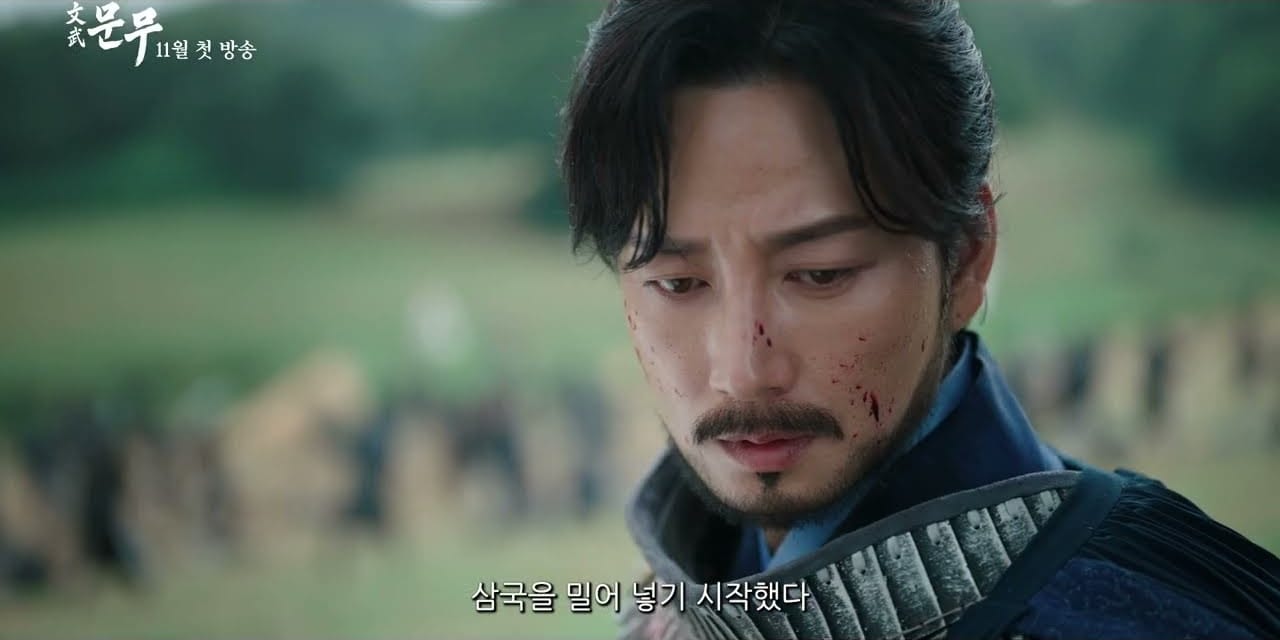
I did not take it well.
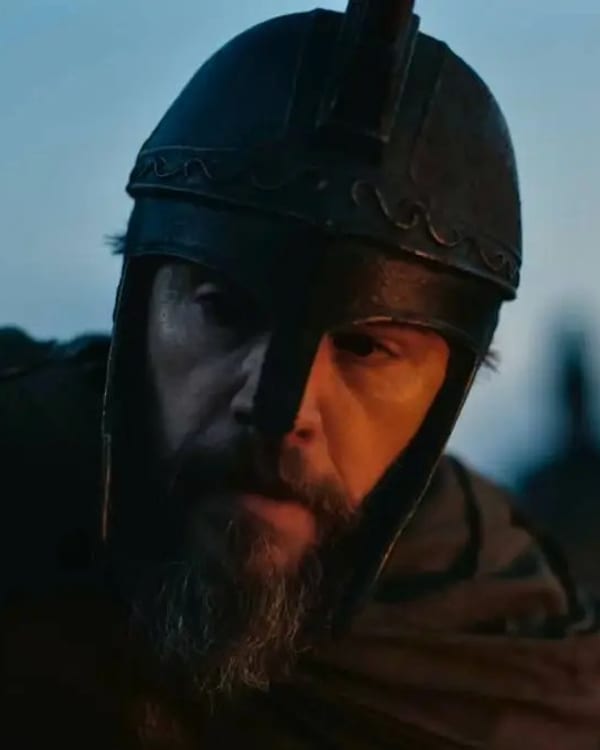
The teaser opens on a battlefield under a total solar eclipse. Kim Beop-min (Bupmin, in my spelling), Chunchu’s son and the future King Munmu, stands in the middle of it, remembering Kim Yushin asking where his will is pointed and his father asking whether he’s made up his mind. Then Jang Hyuk appears as Yeon Gaesomun and asks, “Can’t you hear the sound of war?”
Same century, same war, same father and son, same terrifying Goguryeo strongman. Tang Taizong is in it. Kim Yushin is in it. It’s basically my character list, except they have Jang Hyuk, 28 episodes, and the biggest budget of any drama in KBS history (about 29.4 billion won). My budget is a laptop and my evenings.
It premieres November 14.
For about a day, I seriously considered dropping the whole thing. Who is going to read my version of Kim Chunchu when Kim Kang-woo is playing him on Saturday nights?
Then I thought about how many times I’ve happily watched the same story about Cao Cao.
Everyone Gets a Cao Cao
Cao Cao held the last Han emperor hostage, unified northern China, wrote some of the best poetry of his century, and has been the go-to villain of East Asian storytelling for most of the last thousand years. He is also, by a wide margin, my favorite historical figure to watch other people play.
There’s Bao Guo’an in the 1994 CCTV Romance of the Three Kingdoms, all 84 episodes of it, with a laugh you can probably hear right now if you’ve seen it. There’s Chen Jianbin in the 2010 Three Kingdoms, who plays him as tired, funny, paranoid and weirdly lovable, and pretty much walks away with the show. There’s Zhang Fengyi in John Woo’s Red Cliff (2008), where Cao Cao invades the south partly because he wants Zhou Yu’s wife. There’s Wang Kai in the 2021 Dynasty Warriors movie, purple robe and T-shaped mustache straight out of the game, billed as the youngest Cao Cao ever cast. And there’s Koei, who have been selling Cao Cao to people since before I was born, as a scheming portrait in Romance of the Three Kingdoms and a purple-caped one-man army in Dynasty Warriors.
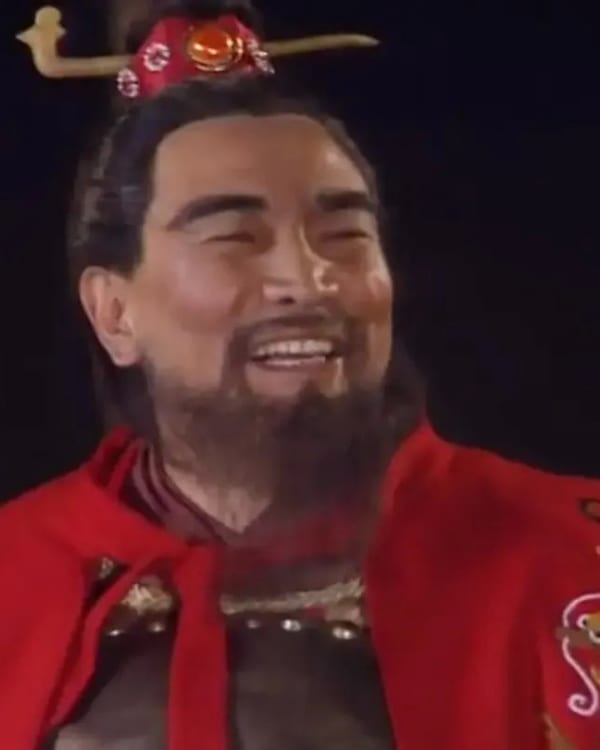
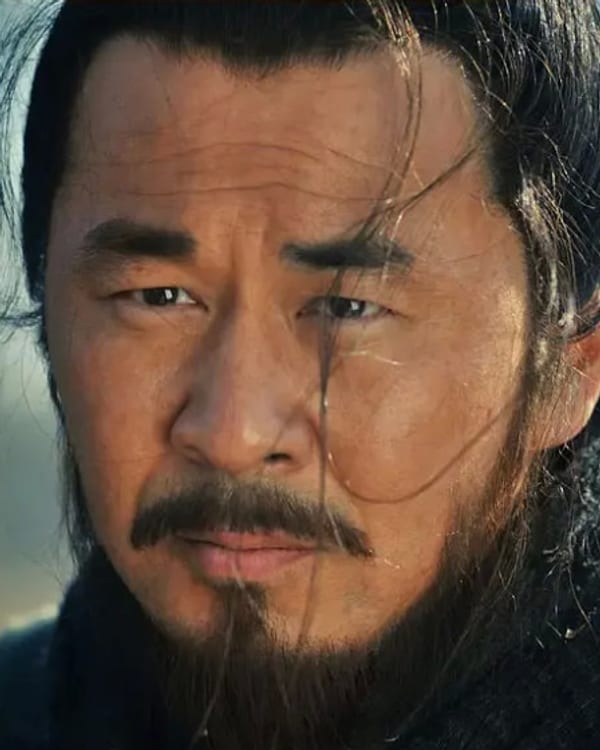
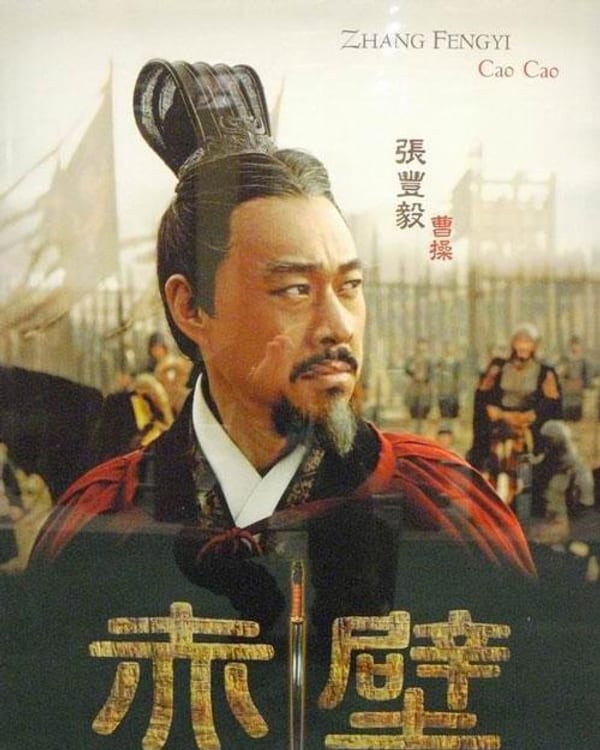
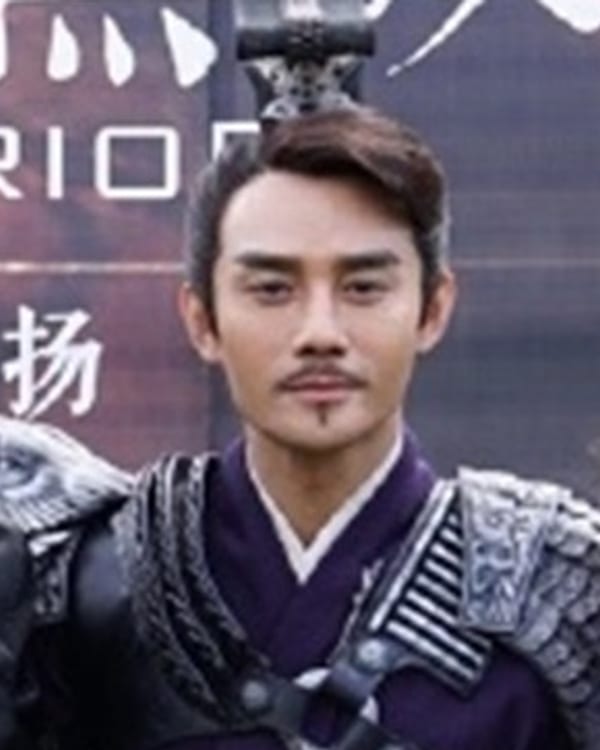
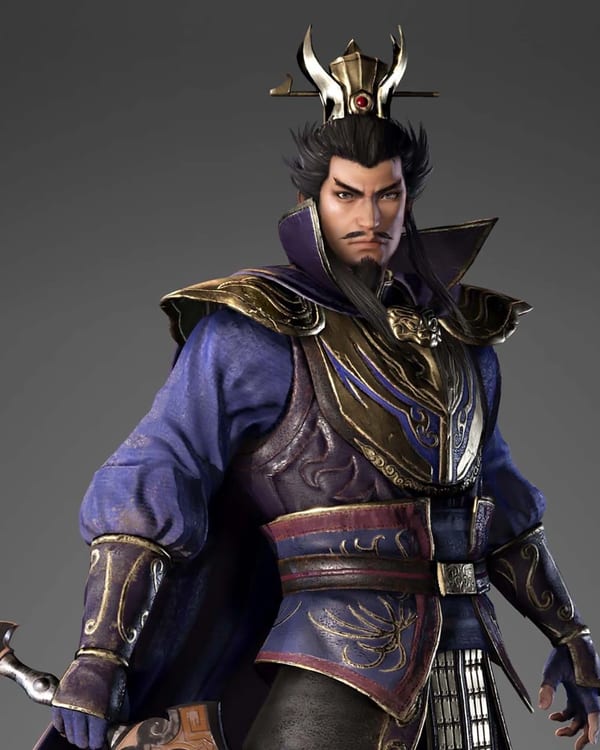
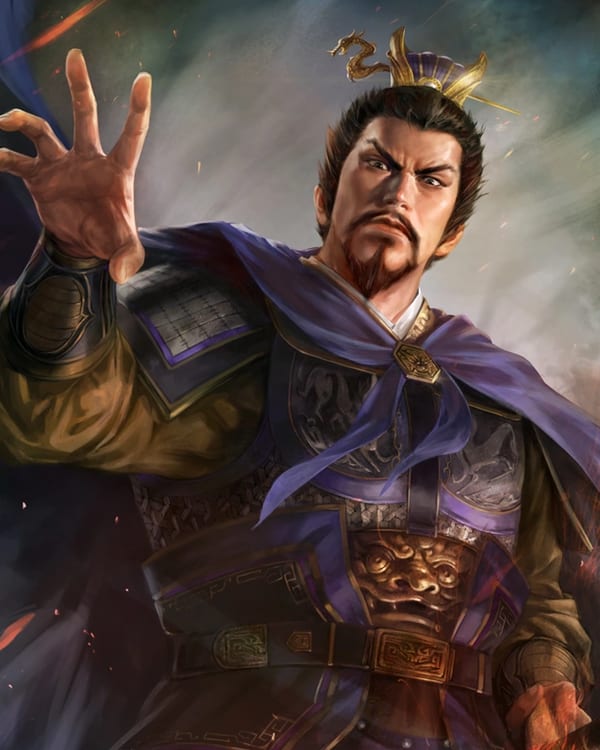
None of these are trying to surprise you with the ending. Everyone knows Red Cliffs is going to burn. Nobody watches the 2010 series to find out whether Cao Cao wins; you watch it to see what Chen Jianbin does with his face when he loses.
Korean TV does the exact same thing. Lee Bang-won, the prince who killed his half-brothers and his father’s right-hand man on his way to becoming King Taejong, has carried or stolen Tears of the Dragon (1996), Jeong Do-jeon (2014), Six Flying Dragons (2015), My Country: The New Age (2019) and Taejong Yi Bang-won (2021), at minimum. Every few years someone new takes a swing at him, and the main argument afterwards is whose Bang-won was best. (Jang Hyuk, KBS’s new Yeon Gaesomun, played Bang-won in My Country. Typecasting, but the good kind.)
And Hollywood has been making World War II movies for eighty years with no sign of stopping. In 2006, Clint Eastwood made two films about the Battle of Iwo Jima, one from each side, and released them two months apart. In 2017 we got Dunkirk three ways: from the beach in Dunkirk, from Churchill’s war rooms in Darkest Hour, and from a London film office trying to turn it into a propaganda movie in Their Finest. Nobody walked out of Darkest Hour annoyed that they’d already seen Dunkirk.
If anything, an audience that already knows the story is a gift. You get to skip the setup and go straight to the interpretation.
Seven Parts Fact, Three Parts Fiction
None of this is a modern thing, either. The Three Kingdoms story was being retold, and changed, centuries before anyone pointed a camera at it.
It starts with the Records of the Three Kingdoms (Sanguozhi), the official history Chen Shou wrote in the late 3rd century, only a few decades after the events. It’s dry, careful, and surprisingly generous to Cao Cao, whom Chen calls “an extraordinary man, a hero beyond his age.” (Chen Shou worked for the Jin dynasty, which got its legitimacy from Cao Cao’s Wei. Not a coincidence.)
Then the storytellers got hold of it. By the 11th century, professional storytellers in Song China were performing Three Kingdoms tales in the city markets, and the poet Su Shi wrote that when the neighborhood kids heard Liu Bei lose, some of them cried, and when they heard Cao Cao lose, they cheered. Liu Bei was the hero and Cao Cao was the villain long before anyone wrote the novel down.
In the 1320s, someone printed the Sanguozhi Pinghua (roughly, The Three Kingdoms in Plain Language), a cheap illustrated edition with pictures running across the top of every page. It opens with a frame story I think about constantly. A scholar named Sima Zhongxiang is summoned to the underworld in a dream to judge the case of three generals who were killed by the founder of the Han dynasty. The verdict: the three generals are reborn as Cao Cao, Liu Bei and Sun Quan, the Han founder is reborn as the last Han emperor so that Cao Cao can bully him, and the judge himself is reborn as Sima Yi, who wins in the end. The entire Three Kingdoms period, recast as a revenge plot.
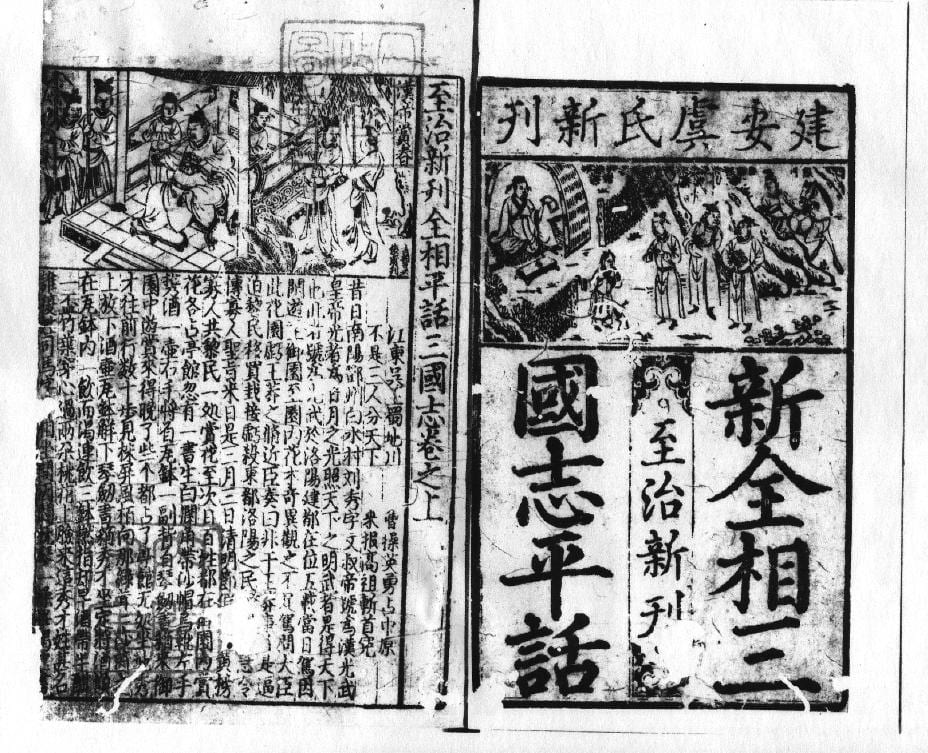
Then, in the 14th century, came the Romance of the Three Kingdoms (Sanguo Yanyi), traditionally credited to Luo Guanzhong. The reincarnation frame is gone, but almost everything else gets bigger. The Qing historian Zhang Xuecheng famously complained that it was “seven parts fact, three parts fiction,” and that readers couldn’t tell which parts were which. He meant it as an insult. I think it’s the best description of historical fiction anyone has come up with.
The Yanyi is also where Cao Cao gets his most famous line. After he kills Lü Boshe’s family, the novel has him say, “I would rather betray the whole world than let the world betray me.” The older anecdote, preserved in the notes to the official history, is smaller: something closer to “better that I wrong others than let others wrong me.” Every retelling sharpened him a little more.
Diving Bells and Dragons
The Yanyi didn’t win because it was more accurate than the Sanguozhi. It won because Zhuge Liang summons the east wind from an altar, Guan Yu’s ghost shows up on a mountain demanding his head back, and a Taoist named Zuo Ci humiliates Cao Cao with magic tricks at his own banquet. People like history fine. They like it a lot more with some magic on top.
This is a very old move.
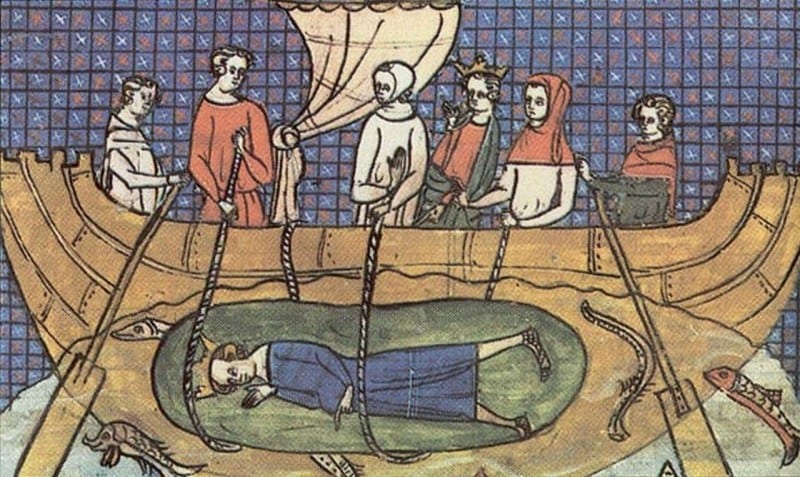
Within a few centuries of Alexander the Great’s death, the Alexander Romance had given him a secret father (the last native pharaoh of Egypt, disguised as a god), a flying basket pulled by griffins, a pair of talking trees that predict his death, and a glass diving bell. It spread into dozens of languages and kept mutating. In the Persian Shahnameh, Iskandar turns out to be Darius’s half-brother, which means the Greek who conquered Persia was secretly Persian all along.
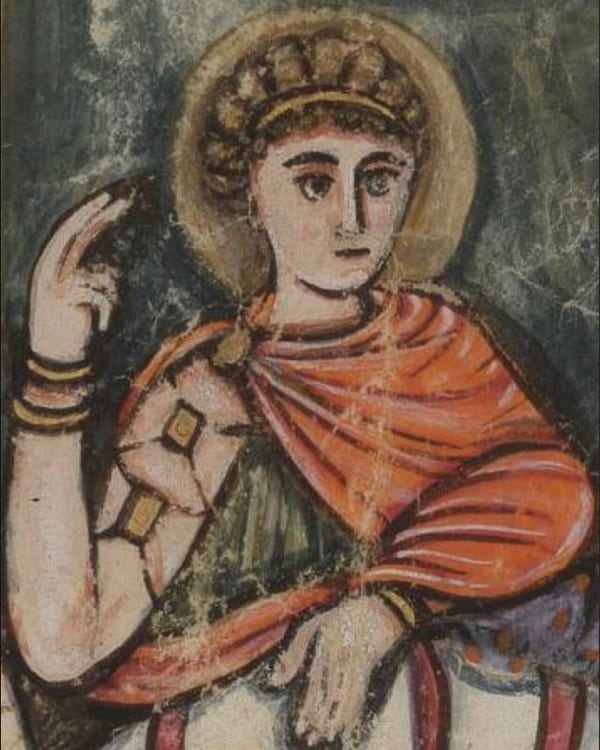
Virgil did it for Rome. I already spent a whole section of my last post on the politics of the Aeneid, so I’ll skip to my favorite part: the romance. On his way to Italy, Aeneas has a love affair with Dido, queen of Carthage, even though Carthage was founded centuries after Troy fell. When he leaves, she curses his descendants and kills herself. Hence, the Punic Wars. A breakup as the origin story of a century-long rivalry between two superpowers. I love it.
And this summer we got Christopher Nolan’s The Odyssey, which I really liked. Nolan decided to show the gods mostly through storms, sea and weather, which sounds like a way to avoid the fantasy. Then he built a practical Cyclops modeled on Goya’s Saturn Devouring His Son and threw in the Laestrygonians and Scylla anyway. He borrowed Sinon from Virgil, cast Travis Scott as a bard as a nod to the poem being passed down out loud, and (mild spoiler) tied the whole voyage to the Bronze Age collapse by suggesting that the mysterious Sea Peoples were the Greeks all along. Some classicists hated it. I didn’t. It’s a myth built on top of a war that probably happened, with some history slipped back underneath.
Korea has its own version of the Sanguozhi-to-Yanyi split. It just happened across two books. The Samguk sagi (1145) is the official history, compiled by Kim Busik for the Goryeo court. The Samguk yusa, written by the monk Iryeon about 140 years later, is the one with Dangun and the bear, kings hatching out of eggs, a girl buying her sister’s dream for a silk skirt, and a bamboo flute that calms ten thousand waves.
Even Munmu got in on it. When he died in 681, he asked to be cremated and laid to rest in the East Sea, so that he could become a dragon and keep guarding Silla’s coast. There’s a rock off the shore near Gyeongju, Daewangam, that’s still known as his tomb. The man KBS named their drama after looked at his own legacy and decided history alone wasn’t going to cut it.
So that’s the pivot.
From everything I’ve seen, Munmu is a classic daeha drama: war councils, sieges, statesmen making impossible choices. With that budget it should be great at all of it, and I’m not going to out-siege KBS. So King for All is going the other way. Closer to the characters, and much closer to the myths. Less about who won which battle, more about who these people were and who they loved. The Samguk yusa version of the 7th century, with the Samguk sagi holding it up from underneath.
(To be clear, I’ll be watching every episode. Jang Hyuk as Yeon Gaesomun is perfect casting.)
My Version
Two days ago I wrote about taste: that it’s closer to something you’re born with than something you study, and that it becomes the scarce thing once making stuff gets cheap. If I believe that, then I have to believe it now, when it’s inconvenient. Anyone can pick the 7th century. What makes a version yours is what you notice in it.
And I’ve been noticing this stuff for a long time. I grew up on Queen Seondeok and never grew out of it. The hwarang, Yeon Gesomun (who supposedly walked around with five swords on his belt), the Goguryeo feather hats, the gold crowns, the clothes: I’m a fan of all of it, in the most uncool, forty-wiki-tabs-open way possible.
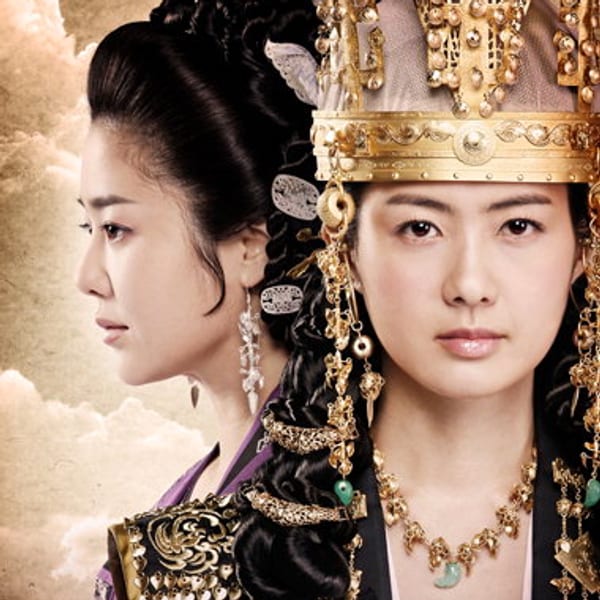
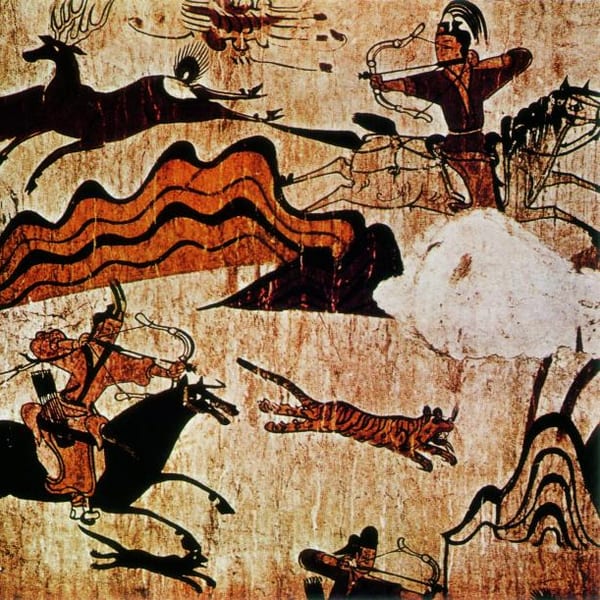
Here’s what I think I can bring to it that a big Korean broadcaster probably won’t.
The animals
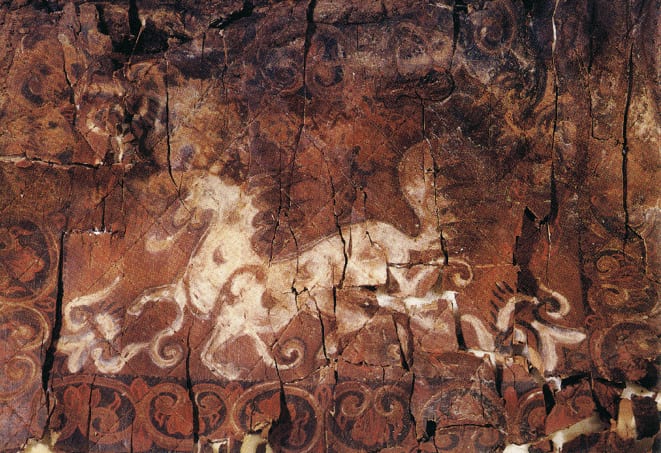
Almost everyone important in King for All has an animal, and most of them have names. Kim Yushin rides white: first Hangyul, the war horse that clears the trench at Nangbi in one jump, and later Hanseul. Gyebek rides Gomanari, jet black and the fastest horse in Samhan, named after Gomanaru, the old bear ferry at Ungjin where he learned to ride. When they finally meet at Hwangsanbeol in 660, Baekje’s last stand, you can tell who’s who from across the field. Yeon Gesomun’s stallion is Damul, after the old Goguryeo word for winning back lost land.
Then there are the mythic ones: the three-legged crow that flies ahead of Jumong, the white horse that kneels beside Hyeokgeose’s purple egg, the guardian deer that leads Onjo south, the bear in Dangun’s cave. And Tang Taizong’s six war horses, who were real enough that he had them carved in stone for his tomb. Two of those reliefs are at the Penn Museum in Philadelphia, if you ever want to say hi.
Part of this is just that I love animals. Part of it is the thing I noticed with the toddlers at Sunday school back in my Pygmalion essay: animals are the easiest way into a story. You don’t need to know who Gyebek is to understand a black horse charging at a white one.
The founding myths
Munmu is made for a Korean audience that learned about Jumong and the egg in elementary school. Most of the people I’d love to have reading King for All have never heard of Goguryeo, Baekje or Silla, and that’s fine. It means the founding myths get to do double duty: they’re great stories, and they’re the fastest way to explain who each kingdom is.
- Goguryeo: Jumong, son of a sky god and the river god’s daughter, hatched from an egg, the best archer alive. When he flees Buyeo, the fish and turtles rise up out of the river to make him a bridge. A kingdom of horse archers with something to prove.
- Baekje: Onjo and Biryu, Jumong’s sons, who leave home when their half-brother from Buyeo shows up to claim the throne. Biryu settles by the sea, where the water is too salty to live on. Onjo settles by the Han River. Biryu’s town fails, and Onjo’s becomes Baekje. A kingdom founded by the younger son who had to start over.
- Silla: A white horse kneeling beside a purple egg, and the boy inside who becomes Hyeokgeose. Later, a golden box hanging in the woods with a white rooster crowing underneath, holding the ancestor of the Kim clan. A kingdom with a very serious interest in gold and bloodlines.
- Gaya: Six golden eggs lowered from the sky on a red cord, and King Suro’s bride, Heo Hwang-ok, sailing in from a faraway kingdom under red sails. Kim Yushin is Suro’s descendant, which is why Gaya matters to this story at all.
The romance
Most daeha dramas treat romance as something to get through between battles. The sources don’t. Some of the best material from this period is love stories, and they’re stranger than anything I would have come up with myself.
Munhee buys her sister’s dream (Bohee dreamed she climbed a mountain and peed until the whole capital flooded) for a silk skirt. Soon after, her brother Kim Yushin “accidentally” steps on Kim Chunchu’s coat string during a game of ball and asks his sisters to sew it back on. Munhee does, and ends up a queen. Yushin’s own parents, Kim Seohyun and Lady Manmyeong, fall for each other on the road. Her father locks her up to stop it, lightning strikes the gate, the guards panic, and she runs off to join him. In my version, the future King Munmu meets his wife on a busy quay, where she informs him that his arithmetic is sloppy. (That one I did make up.)
And a surprising number of the founding myths are love stories at heart: a sun god who looks down at the river god’s daughter one day too long, Jumong and Soseono, the woman who helped him build Goguryeo and whose sons went on to found Baekje, and Suro waiting on the shore for a ship with red sails.
All three kingdoms
Korean historical dramas almost always pick a side. Queen Seondeok was Silla. Jumong and Yeon Gaesomun were Goguryeo. King Geunchogo and Gyebaek were Baekje. The King’s Dream, KBS’s last drama about this exact era, was Kim Chunchu’s story. And going by the title, Munmu will be Silla’s too.
King for All splits its time much more evenly. Goguryeo gets Yeon Gesomun and the war against Taizong, Baekje gets Euija and Gyebek, Silla gets Chunchu and Yushin, and Gaya and Tang get their own episodes too. Nobody exists just to be beaten. Gyebek isn’t a final boss for Yushin, and Yeon Gesomun isn’t just the scary man up north. The unification was a tragedy for two out of the three kingdoms, and the story should feel like it.
Anyway
I don’t know if King for All will end up being any good. But I know it’ll be mine. Nobody at KBS is going to name Gyebek’s horse after a bear ferry, or care as much as I do about which feathers go on a Goguryeo hat. That’s the stuff that made me want to write this in the first place, and I’m starting to think it matters more than who got to the 7th century first.
And if Munmu turns out to be great, which I kind of hope it does, a lot more people will know who Kim Chunchu is by the time I’m done. I’ll take the free marketing.
Munmu premieres November 14. I’ll be watching, and taking notes.
Image credits: Stills, posters and game art from 문무 (KBS), Romance of the Three Kingdoms (CCTV, 1994), Three Kingdoms (2010), Red Cliff (2008), Dynasty Warriors (2021), Queen Seondeok (MBC, 2009), The Odyssey (Universal, 2026), Dynasty Warriors 9 and Romance of the Three Kingdoms XIV (Koei Tecmo) are © the studios, broadcasters and publishers behind them. The Sanguozhi Pinghua, the Vergilius Romanus, the medieval Alexander manuscript, the Muyongchong hunting mural and the Cheonmachong Heavenly Horse are public-domain works, sourced from Wikimedia Commons.