(Mostly) Everything is Tribalism
All ideology devolves into religion. All religion devolves into nationalism.
 · AI Assisted
Religious propaganda cannot materialize without group feeling.
Ibn Khaldun, The Muqaddimah (1377)
Let me start with a disclaimer: I don’t like talking about domestic politics. Left versus right, red versus blue, whatever we’re calling it this year.
There are three reasons.
- It’s depressing. Nothing in the news cycle ever seems to get better. It just gets louder.
- It always arouses harsh emotions. I have never seen a conversation about domestic politics, online or at a dinner table, that left everyone feeling closer to each other afterwards.
- It’s my personal belief that religious people should not indulge themselves too much in worldly affairs like this. Paul told the Philippians that “our citizenship is in heaven.” I take that seriously, even if I fail at it, which is often. (Usually around election season.)
So this isn’t an essay about which side is right. It’s about why I think the sides were never really about what they said they were about.
Here’s what I’ve noticed. Over the last few years, almost every prominent political voice I follow, left and right, has at some point said something that only makes sense once you stop listening to their ideology and start looking at where they come from. The anti-imperialist who misses his empire. The small-government man with one exception. The affordability candidate whose one foreign policy promise is about Gaza. Once you see it, you can’t unsee it.
In short, I believe the only unit that really matters in society and politics is the group you belong to: your people, your faith, your blood. Most self-professed ideologies are intellectualized add-ons, sweaters we wear over the tribe, and when things get hard, the sweater comes off. All ideology devolves into religion. All religion devolves into nationalism.
(I say “mostly” in the title because I don’t think it’s literally everything. More on that at the end.)
Let’s dive in.
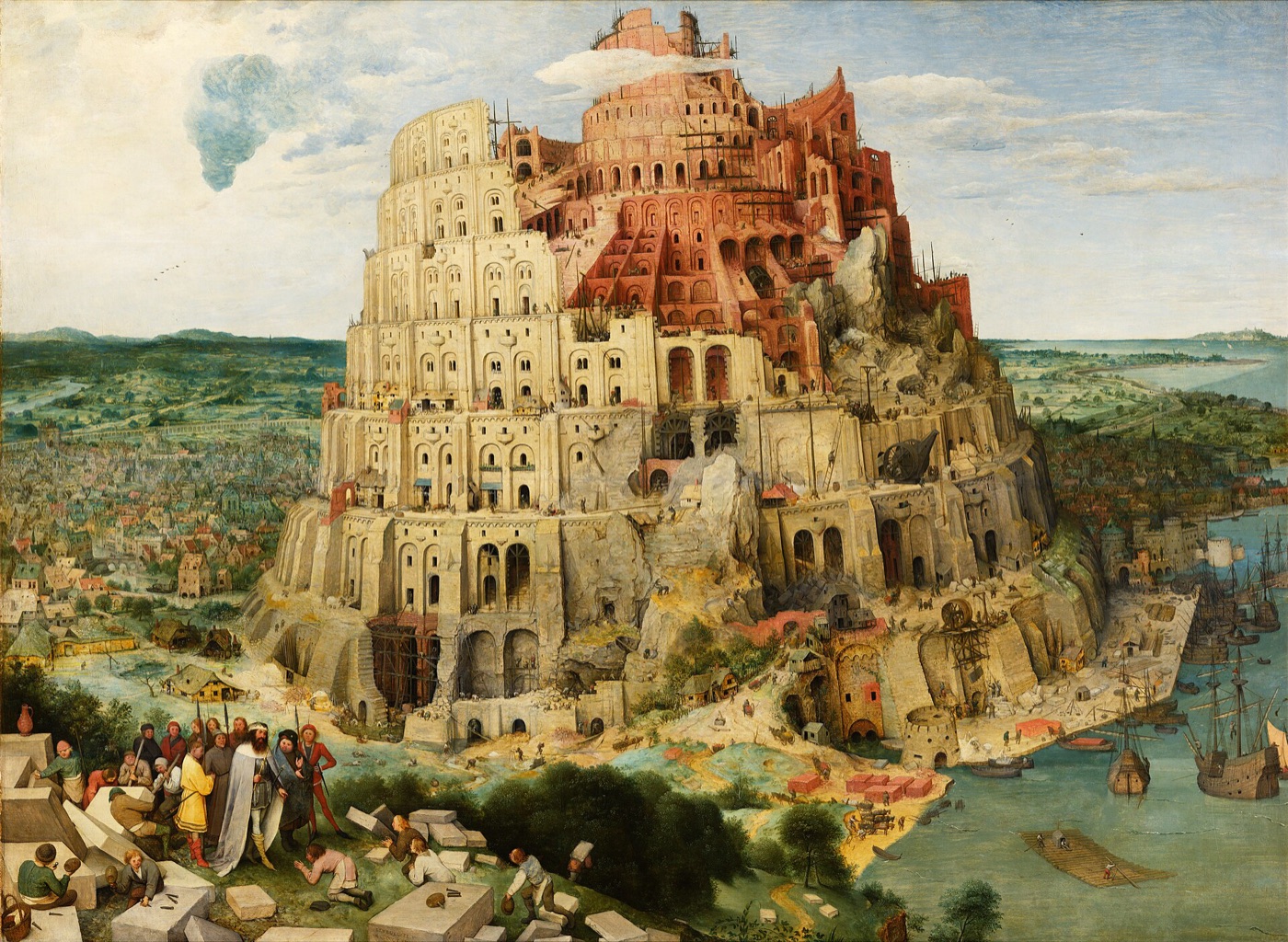
The Exception
If you grew up in the West after 1945, you were taught, without anyone quite saying it out loud, that politics is a battle of ideas.
Even the vocabulary is a fossil of that belief. “Left” and “right” come from the French National Assembly of 1789, where the king’s supporters sat to the right of the president and the revolutionaries sat to his left. Ever since, we’ve told the story of politics as a story of -isms: liberalism, conservatism, socialism, fascism, communism.
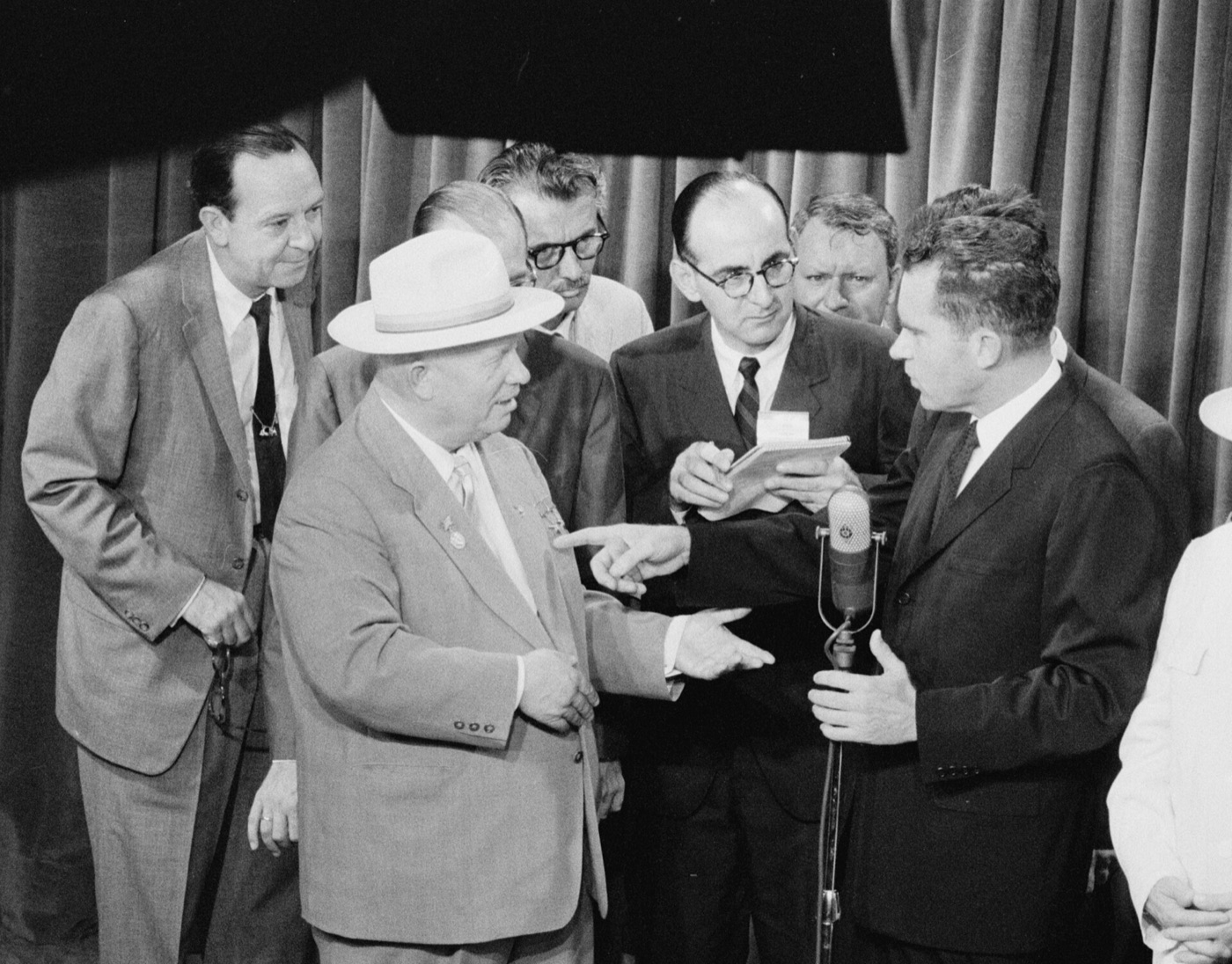
And for the second half of the 20th century, the story seemed true. The Cold War was the purest battle of ideologies the world has ever seen: two superpowers, each claiming to have the correct theory of history, each promising that all of humanity would eventually come around to its system. In 1959, the Vice President of the United States and the Premier of the Soviet Union stood in a model kitchen in Moscow and argued about washing machines as if the fate of the world depended on it. In a sense, it did.
When the Soviet Union collapsed, Francis Fukuyama asked whether we had reached “The End of History”: the war of ideas was over, and liberal democracy had won. Samuel Huntington’s answer, The Clash of Civilizations, was that the next fights would be fought along the much older lines of culture and religion. For thirty years, the smart money was on Fukuyama. I think Huntington is having the better decade.
But here’s the thing. Even during the Cold War, whenever ideology and tribe pointed in different directions, the tribe won.
In 1969, the two largest communist countries on Earth were shooting at each other over a small island in the Ussuri River. In 1978, communist Vietnam invaded communist Cambodia, and a few weeks later communist China invaded communist Vietnam to “teach it a lesson.” The political scientist Benedict Anderson opened Imagined Communities (1983), his famous book on nationalism, with exactly these wars: the first wars ever fought between Marxist states, and none of the governments involved made more than a token effort to justify them in Marxist terms.
Even the Soviet Union itself. When Hitler invaded in 1941, Stalin didn’t rally his people around dialectical materialism. He called it the Great Patriotic War, brought back Russian heroes like Alexander Nevsky and Kutuzov, and in 1943 let the Orthodox Church elect a patriarch for the first time since the 1920s. After the victory, Stalin, a Georgian, raised a toast “first of all, to the health of the Russian people, because it is the most outstanding nation of all the nations forming the Soviet Union.”
Communism, then the Church, then the Russian people. In four years.
(The French philosopher Raymond Aron had a name for the first step. He noticed that Marxism came with prophets, scripture, heretics and a promised paradise, and in 1955 he called his book about it The Opium of the Intellectuals. And the Chinese Communist Party has been quietly trading Marx for “the great rejuvenation of the Chinese nation” for a while now. I wrote about that in my essay on Xi Jinping.)
So my argument is this: the age of ideological politics was the exception. It was held together by an unusual situation, in which two superpowers each needed a universal idea to hold together a coalition of very different peoples. Loosen the superpowers’ grip, and the world goes back to its default setting.
That default is tribalism.
The Streamers
Let’s start with the people who talk about politics for a living.
Hasan Piker
Hasan Piker is probably the most popular left-wing streamer in the world. He is anti-fascist and anti-imperialist, and he has spent years on Twitch railing against American empire, colonialism and the right. He was born in New Jersey, raised in Turkey, and got his start at The Young Turks, the online network founded by his uncle, Cenk Uygur. (Hold onto that name. It’ll come back later.)
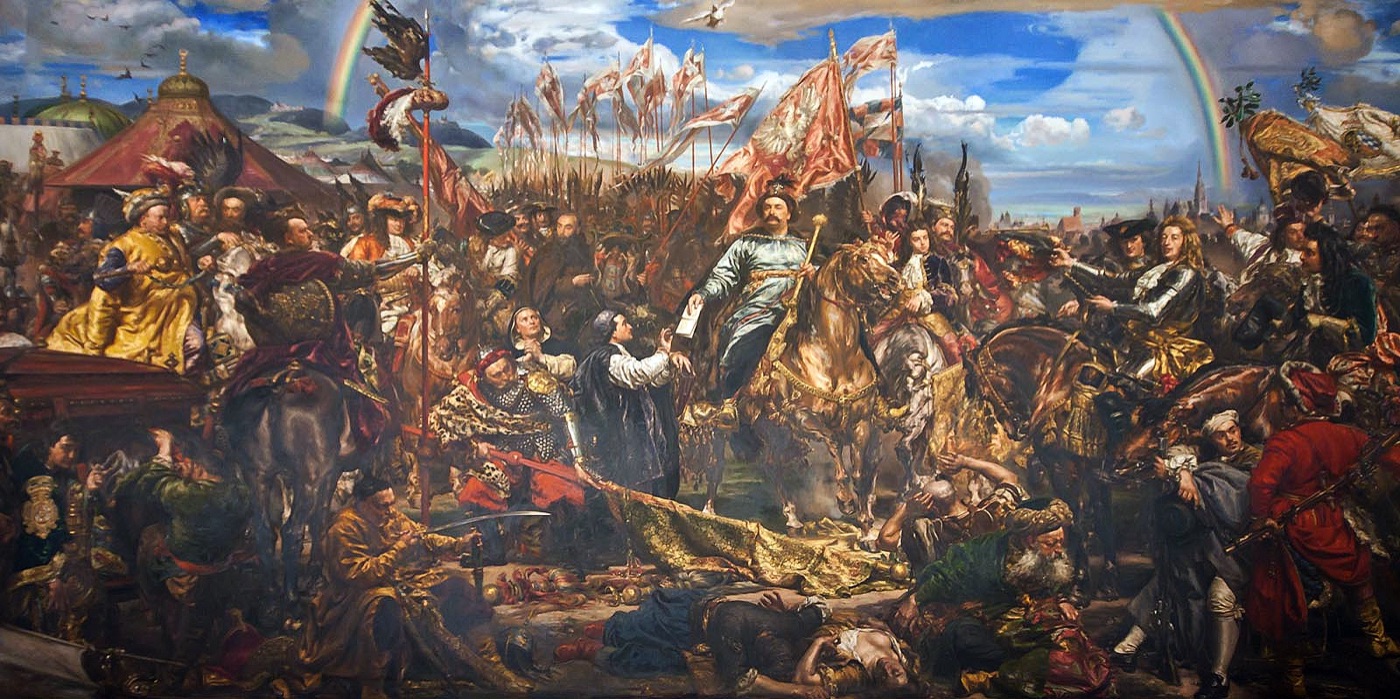
Earlier this month, a clip from one of his streams made the rounds. In it, he says that “objectively it would be better” if the European states hadn’t gotten together to stop the Ottomans from conquering “damn near the entirety of Europe.” Then: “We almost got there, but we stopped at the fucking gates of Vienna because of the goddamn Polish… should have let us get there.”
Us.
I don’t think it’s fair to hang a person on one clip. Streamers talk for eight hours a day, and plenty of it is bits. But notice the pronoun. The most famous anti-imperialist on the internet, wistful about an empire that ruled the Balkans for five centuries and besieged Vienna twice. Not because the Ottomans fit any theory of anti-imperialism he’s ever articulated (they very much don’t), but because they were his. When the ideology and the tribe point in different directions, the pronoun tells you which one is driving.
Mehdi Hasan
Mehdi Hasan is probably the best-known British journalist on the left today. He’s a ferocious interviewer, and I’ve genuinely enjoyed watching him take apart politicians of every party, first at Al Jazeera and MSNBC and now at Zeteo, the outlet he founded.
But his causes have a pattern: Gaza, Kashmir, Islamophobia in Europe, Hindu nationalism in India. His family is Indian Muslim, from Hyderabad. When he grilled a senior BJP official on Al Jazeera back in 2015, Hindu nationalist trolls called him “a Pakistani,” and he had to point out that his family is from India. I understand why the BJP is personal for him.
Which is why his recent post on the people persecuted in Pakistan caught my eye. It left out the Hindus. That’s not a small omission: rights groups have been documenting the abduction, forced conversion and forced marriage of Hindu girls in Pakistan for years.
My guess is that it isn’t ignorance. He knows the region far better than I do. It’s that for an Indian Muslim who has spent his career fighting Hindu nationalism, conceding that Hindus are victims anywhere means handing the BJP a talking point. The tribe edits the list.
Ben Shapiro
To be clear, this isn’t a left-wing thing.
Ben Shapiro is probably the most prominent right-wing pundit of my generation. Facts don’t care about your feelings. Small government, free markets, skeptical of handouts. When the Trump administration froze foreign aid in early 2025, he agreed with people comparing it to chemotherapy.
Except, it turns out, for one country. In April 2024, he backed the aid package that sent billions of dollars in military aid to Israel. To his credit, he has also said Israel should eventually get off American aid altogether. But listen to his reasons: so that $3 billion a year doesn’t get to decide how Israel makes its foreign policy. What Israel still needs from America, he added, is the veto at the UN Security Council. Even his case against the aid was a case for Israel.
And when the American right had its big civil war last December, at Turning Point’s AmericaFest, what was it about? Shapiro called Tucker Carlson’s interview with Nick Fuentes “an act of moral imbecility.” Steve Bannon fired back that Shapiro put Israel’s interests ahead of America’s. Megyn Kelly summed it up: “There was a rift even before we lost Charlie, and it revolves around Israel.”
Not taxes. Not regulation. Israel. (And the other side of that fight? They call themselves America First. Tribe against tribe, all the way down.)
Shapiro is an Orthodox Jew and has never hidden it. I don’t think he’s lying about his small-government beliefs. I think they’re real, and that they lose every time they run into his people.
Zohran and El-Sayed
Politicians are more careful than streamers. They have consultants.
Zohran Mamdani won New York’s mayoralty on a famously disciplined affordability message: free buses, a rent freeze, city-owned grocery stores. Abdul El-Sayed, a 41-year-old doctor, just won Michigan’s Democratic Senate primary on healthcare and the economy.
But notice which fights they refuse to walk away from. New York City doesn’t have a foreign policy, and yet the one foreign policy promise Mamdani made, and repeated for months, was to arrest Benjamin Netanyahu if he set foot in the city. (In July he admitted he doesn’t have the legal authority, and settled for declaring Netanyahu not welcome.) El-Sayed called Gaza a genocide and made ending unconditional military aid to Israel a pillar of his campaign. At one debate, he told his opponent that her vote for $3.3 billion in aid was “the pro quo that comes with the quid of $30m spent by AIPAC.”
Both men are Muslim. Gaza isn’t the only thing they talk about, but of all the injustices in the world, it’s the one they will not give an inch on. I don’t think that’s a coincidence.
To be fair, the tribalism runs both ways here. AIPAC’s super PAC spent over $30 million trying to stop El-Sayed in the primary, a record for them. Last week, Senator John Kennedy of Louisiana explained AIPAC’s involvement by saying that El-Sayed must “sleep in a Bin Laden jersey.” (El-Sayed’s reply: “That’s rich coming from someone who wears his bed sheets out at night.“)
The man ran on healthcare. The other tribes reminded him which one he belonged to anyway. Hold onto that, too.
The Beautiful Game
Okay. Let’s take a breath and talk about something more fun.
This summer, Argentina beat England 2–1 in the World Cup semifinal in Atlanta, with Lionel Messi setting up both goals in what everyone knew was his last World Cup. After the match, Argentina’s players got hold of a fan’s white hotel bedsheet with Las Malvinas son Argentinas (“the Falklands are Argentine”) painted on it. Giovani Lo Celso unfurled it, and Cristian Romero and Lisandro Martínez held it up for the cameras. (All three have spent years of their careers being paid by English clubs. Business is business. The Malvinas are forever.)
FIFA fined Argentina’s federation for it. Javier Milei, Argentina’s libertarian president, called the banner “perfectly valid.” This is the same Milei who once called Margaret Thatcher, the prime minister who won the Falklands War, “one of the great leaders in the history of humanity.” Ideology is ideology. The Malvinas are the Malvinas.
Argentina lost the final to Spain in extra time. The bedsheet came back anyway: it showed up at Messi’s farewell match at the Monumental earlier this month, while a Falklands War veteran sang the national anthem.
Meanwhile, in France, the captain of the national team got himself into ethnic politics. Kylian Mbappé, son of a Cameroonian father and a mother of Algerian descent, raised in the Paris suburb of Bondy, told Vanity Fair in May: “I know what it means and what consequences it can have for my country when people like them come to power.” By “them,” he meant the National Rally, which leads the polls for next year’s presidential election. The party’s leaders hit back, and one of its spokesmen said the captain is supposed to represent all of France, not be a “political activist.”
The party’s founder, Jean-Marie Le Pen, was complaining back in 1996 that it was “artificial” to bring in players from abroad and call them the French national team. Its current president, Jordan Bardella, called Mbappé a “model of assimilation” in 2022. It turns out you’re a model of assimilation right up until you have opinions.
France is the country that invented the idea that anyone can become a citizen by signing up to a set of universal values. Its football team has become a running referendum on whether that’s true.
Football is the one arena where everyone admits it’s tribalism, which is exactly why it’s mostly harmless. Nobody pretends the Albiceleste has a theory of history. The trouble starts when the tribe puts on the jersey of an ideology and forgets it’s wearing one.
The Glue
So why is all this happening now?
Here’s my theory: every empire needs a glue.
A tribe doesn’t need an ideology. Everyone is somebody’s cousin. But the moment you rule over many tribes, you need a story bigger than any one of them: a reason for the Serb and the Arab and the Armenian to belong to the same state. For the Soviets, that story was Marxism. For the American-led world after 1945, it was liberal democracy, or at least anti-communism.
Those glues are drying out. And when the universal glue stops working, people don’t become free-floating individuals. They fall back on the next-biggest thing they believe in, which is usually God. When that stops working too, they fall back on the one thing that never stops working: blood, language and land.
The best example I know of is the Ottoman Empire.
Ottomanism
By the early 1800s, the Ottomans ruled Turks, Arabs, Greeks, Armenians, Serbs, Bulgarians, Albanians, Kurds and Jews on three continents. For centuries, they had held it all together through the millet system, under which each religious community ran its own affairs under the Sultan.
Then nationalism arrived from Europe. The Greeks rose up in 1821 and had their own state by 1830. The Serbs had already carved out their own principality. The empire’s reformers could see where this was going: if every people wanted its own country, there would be no empire left.
So they invented a new glue. They called it Ottomanism: the idea that every subject, Muslim or Christian or Jew, Turk or Greek or Arab, was first and foremost an Ottoman, equal before the law.
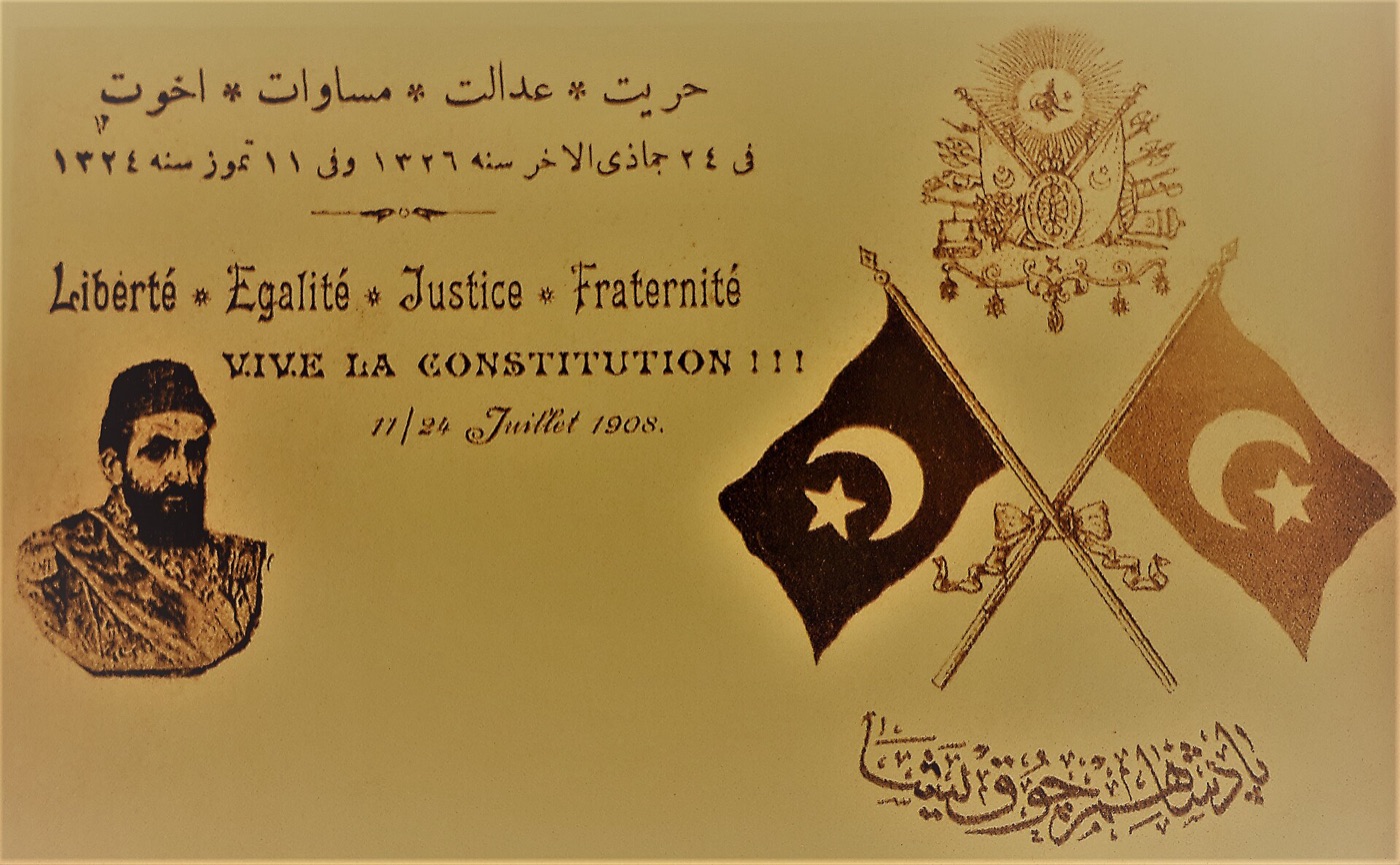
The Tanzimat (“Reorganization”) began in 1839 with an edict promising security of life, honor and property to all subjects regardless of religion. A second edict in 1856 promised Muslims and non-Muslims equality. In 1869 came a common Ottoman citizenship law. And in 1876, the empire got its first constitution, whose eighth article declared: “All subjects of the empire are called Ottomans, without distinction whatever faith they profess.” The next year, a parliament with Muslim, Christian and Jewish deputies opened in Istanbul.
On paper, it was beautiful. In practice, it didn’t work.
The Christians of the Balkans didn’t want to be equal Ottomans. They wanted to be Serbs and Bulgarians and Romanians, in their own countries. After a disastrous war with Russia, the Congress of Berlin (1878) made Serbia, Montenegro and Romania independent and Bulgaria autonomous. Meanwhile, plenty of Muslims resented being made equal to the infidels. Sultan Abdul Hamid II shut down the parliament in 1878. It didn’t meet again for thirty years.
So Abdul Hamid switched glues. If the Christians were leaving anyway, he would hold together what was left with Islam. He leaned hard on his title as Caliph, the leader of all Muslims everywhere, and built a railway from Damascus to Medina, paid for in part by donations from Muslims around the world.
That didn’t work either. In 1914, the Sultan, as Caliph, declared a holy war and called on Muslims everywhere to rise up against Britain, France and Russia. Two years later, the Sharif of Mecca, guardian of Islam’s holiest city, rose up against him, with British help. The mostly Muslim Albanians had already declared their own independence in 1912. Islam couldn’t hold the Arabs and the Albanians any better than Ottomanism had held the Greeks and the Serbs.
The last generation of Ottoman leaders drew the obvious conclusion. In 1904, a Tatar émigré named Yusuf Akçura had published an essay called Three Kinds of Policy, laying out the empire’s three possible glues: Ottomanism, Islamism and Turkism. Ottomanism, he argued, was already dead. Islamism was impractical. Only Turkism could work. Two decades later, the empire was gone, the Republic of Turkey stood in its place, and in 1924 the caliphate itself was abolished.
Ottomanism, then Islam, then Turkishness. The Ottoman Empire lived through this entire thesis in less than a century. Ideology devolved into religion, and religion devolved into nationalism.
(The revolutionaries who forced the constitution back on the Sultan in 1908, and then steered the empire toward Turkish nationalism, were called the Young Turks. Remember Hasan Piker’s first job, at a network that borrowed their name? “Should have let us get there.“)
The Caliphate and Rome
The Ottomans weren’t the first to go through this.
The early Islamic caliphate was built on the most powerful universal idea of its age: the ummah, one community of believers, in which Arab and non-Arab were equal except in piety. In my essay on the Roman-Persian Wars, the Arabs wiped the Sassanian Empire off the map in under twenty years. But the Umayyad caliphs who ruled the new empire ran it, in practice, as an Arab empire. Non-Arab converts, the mawali, were often still taxed like unbelievers and treated as second-class Muslims.
In 747, a revolution broke out in Khorasan, in Persia’s far northeast, with heavy Persian support. By 750, it had overthrown the Umayyads. The new Abbasid caliphs built their capital at Baghdad, a short ride from the old Sassanian capital at Ctesiphon, and ran their court like Persian kings. Persian writers started a literary movement, the Shu’ubiyya (from the word for “peoples”), arguing that non-Arabs were the equals of the Arabs, or better. By 945, a Persian dynasty, the Buyids, controlled Baghdad, and the caliph was a figurehead. By 1010, Ferdowsi had finished the Shahnameh: some fifty thousand couplets on the kings of Persia, in Persian.
The universal faith survived. The universal state didn’t.
Rome went the same way. In 212, the emperor Caracalla made every free man in the empire a Roman citizen. Romanness became a civic identity, a sort of Roman Ottomanism. When that glue wore thin, the empire switched to a new one: in 380, Nicene Christianity became the official religion of the state.
And almost immediately, Christianity started to split along regional and ethnic lines. After the Council of Chalcedon in 451, most Christians in Egypt and much of Syria rejected Constantinople’s definition of Christ’s nature, and spent the next two centuries being pressured, and sometimes persecuted, by their own emperors over it. When the Arabs arrived in the 630s, Syria and Egypt fell within a few years. Historians still argue about how much the religious split helped the Arabs. Nobody argues that it helped Constantinople.
In the West, the Goths and Vandals who carved up the empire were Arian Christians, a different flavor of the same faith that conveniently kept them apart from their Roman subjects. The Franks, who converted straight to the Romans’ Catholic church, are the ones who ended up inheriting the West.
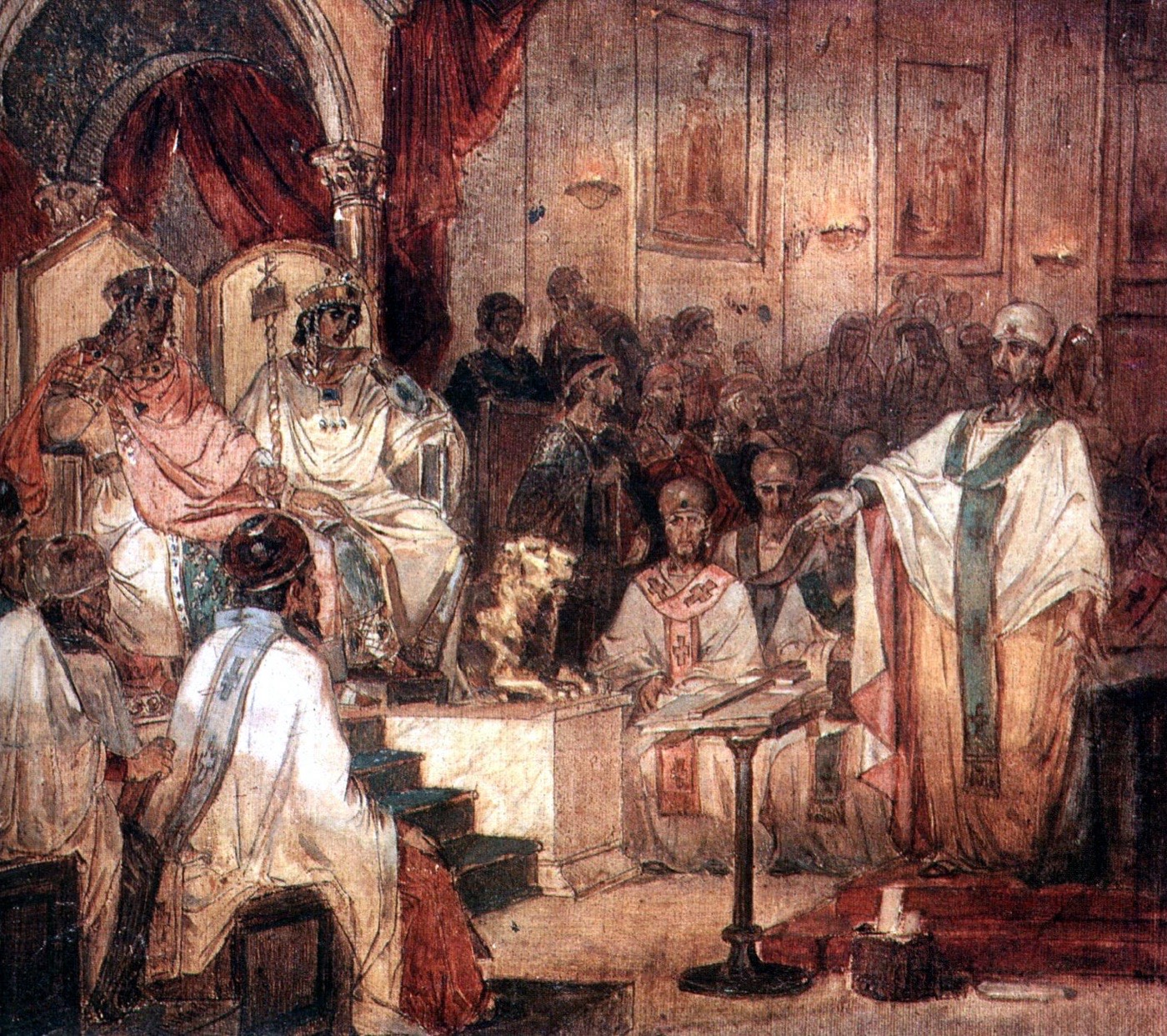
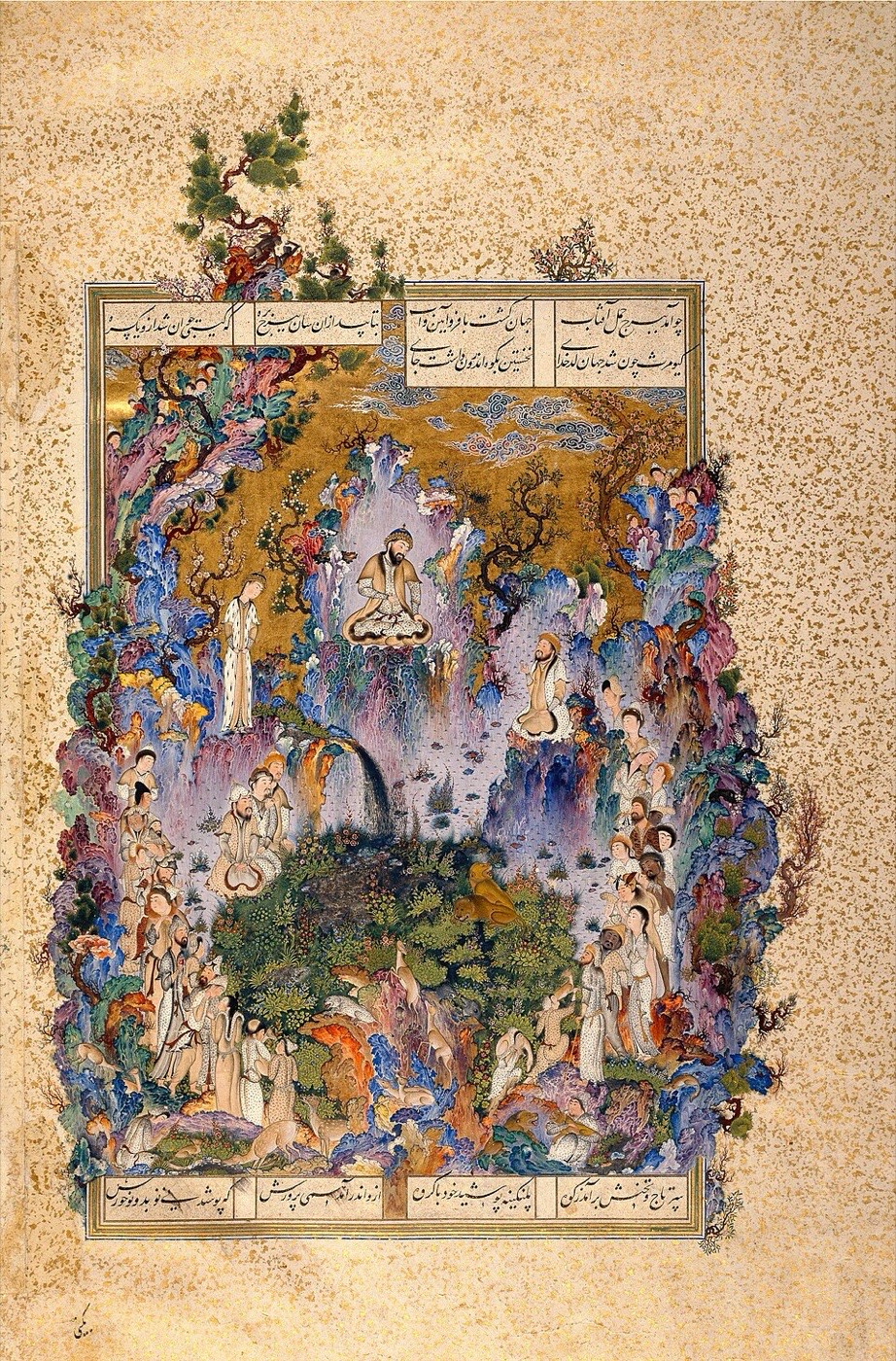
Do you see the parallels yet?
Every universal order starts with an idea big enough to hold everyone: Roman citizenship, the ummah, Ottomanism, liberal democracy. When the idea stops working, people retreat to religion. And when religion stops working, or rather, when it splits into our version and theirs, they retreat to the tribe.
I think that’s where we are now. The American-led order is wobbling, its universal glue is drying out, and everyone, from Twitch streamers to football captains, is quietly feeling for the edges of their own people.
So, What Now?
Which leaves a serious question: in an environment like this, what political and social beliefs should a person actually adopt?
The cynical answer, and I’m a little embarrassed by how convincing I find it, is that you double and triple down on your own identity, or you get eaten by everyone else’s tribalism. If every other group is organizing around blood and faith, the person who insists on being a free-floating individual with a carefully reasoned set of policy preferences isn’t enlightened. He’s alone.
Remember El-Sayed. He ran on healthcare, and a United States senator still told the country he sleeps in a Bin Laden jersey. You don’t get to opt out of having a tribe. At best, you get to choose which one.
So which one is mine?
I’m Gen Z and Korean-American, some fusion of the two that doesn’t have a flag yet. And honestly, I find it insufficient. “Korean-American” is a hyphen, not a homeland. It’s a great identity for ordering food and a thin one to build a life on. “Gen Z” is even thinner: a cohort defined by roughly when we got our first phones.
But I’ll admit that my identity plays a big part in why I want to tell the King for All story (more on that here). Part of it is just that I’m a history nerd who has had Kim Chunchu and Yeon Gesomun living in his head since he was a kid. But part of it is that the 7th century is when the people I come from started becoming one people, out of three kingdoms that had spent centuries trying to destroy each other. Silla’s answer to having conquered the other two was, at least in part, a story: that Goguryeo, Baekje and Silla had always been one, the Samhan.
Every nation starts as a tribe that won. I want to write about the moment it happened to mine.
A Small Hope
I said at the start that I don’t think it’s literally everything. Here’s the “mostly.”
“There is neither Jew nor Gentile, neither slave nor free, nor is there male and female, for you are all one in Christ Jesus.” For a while, the early church was the most radically anti-tribal community in the ancient world: Jews and Greeks, slaves and masters, eating at the same table in a world that sorted everyone by blood.
Of course, my own thesis applies to religion too. Give it a few centuries, and the universal faith becomes the Coptic church, the Armenian church, the Russian church, each with a flag of its own. Faith becomes a tribe the moment it’s used as one.
But I still believe a real religious revival, one that’s actually about God rather than a flag with a cross on it (or a crescent, or a star), is the only hope for a sane world. It’s the only glue I know of that has ever asked people to love their enemies, not just tolerate their neighbors. Our citizenship is in heaven. That might be the only citizenship big enough to hold all of us.
I wouldn’t count on it, though.
But again: this is all just the rambling of a random guy on the internet. Take it with a grain of salt.
Image credits: Pieter Bruegel the Elder, The Tower of Babel (1563, Kunsthistorisches Museum, Vienna); the Kitchen Debate by Thomas J. O’Halloran (U.S. News & World Report collection, Library of Congress); Jan Matejko, Sobieski at Vienna (1883, Vatican Museums); a 1908 Ottoman postcard celebrating the constitution; Vasily Surikov’s study of the Council of Chalcedon (1876); and The Court of Gayumars, attributed to Sultan Muhammad, from the Shahnameh of Shah Tahmasp (c. 1522–25). All public domain, via Wikimedia Commons.